






 Copy Link

Snapshots
Determining your skin's undertone is the single most life-altering thing a cosmetician could tell you about beauty. While it may seem insignificant, being aware of your own and applying your makeup appropriately can have a profound effect. As soon as you set foot in a room, we promise you will make an impression.
A useful clinical tool for standardised colour matching is the Pantone SkinTone Guide (PSTG), according to a study. Unfortunately, this method is not available to everyone. Luckily, we have come up with three tricks to help you determine your skin undertone. But first, let's define undertones, talk about the different kinds of undertones, why it's vital to know your undertone, and how to use that information to choose the right colour palette.
Why do you need to understand your skin's undertones?
When choosing a new shade of lipstick or foundation, we typically let colour sway our decisions. You may love a shade at the makeup counter but hate it on your skin. Your skin's undertone is a major factor here. Your skin's inherent pigmentation is what this term alludes to. If you want to know which foundations and colour palettes work best with your skin tone, you need to know your undertone. Always trust your instincts rather than blindly adhering to a colour scheme. Overall, it's important to wear a colour that makes you happy.
What is a skin undertone?
Have you ever noticed that a lipstick shade you expected to suit you ends up overwhelming your look? The same thing happens to all of us beauty junkies all the time, so we figure out our undertones so we can rock the perfect makeup look. Your undertone is constant year-round, even though your skin tone could shift. You can find your ideal shade of foundation, concealer, and palette by determining your undertone, which is the underlying natural colour of your skin. Let's find out how to identify your undertone so you can look your best.
Types of skin undertones
The three classic undertones are neutral, chilly, and warm. Peach, yellow, and golden undertones make up the warm spectrum. Certain persons have sallow complexions with warm undertones. Pink and bluish shades are examples of cool undertones. Your undertones should be about the same shade as your skin tone if they are neutral.
Your undertone is different from your natural tone, which is your bare skin colour. Undertones can be warm or chilly depending on the skin tone; this is true even for the lightest complexions. Makeup products don't usually blend with the natural tones just beneath the skin's surface, which is why it might be difficult to choose a shade that matches your skin tone.

How to know your undertone
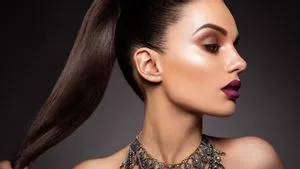
Eye shadow in earthy tones like copper, gold, bronze, olive, orange, brown, or yellow, paired with a coral or peach blush, is the perfect makeup look for women with warm undertones. Look for a peach or yellow foundation shade and a red lipstick that leans more toward orange. If your skin tone is cold, the ideal eye makeup colours for you to wear are shades of pink or rosy blush with grey, silver, magenta, white, or any of the jewel tones, like emerald, sapphire, or garnet. If you must wear red lipstick, go for a wine or burgundy hue that leans more toward blue, and if you must wear foundation, try a neutral or pinkish tint.
How to find your skin’s undertone
Wearing nothing but a white bathrobe or towel, stand in front of your bathroom mirror. Use a clean white towel to wrap your hair and another to cover the furniture so you can see the colours beneath the surface. A chilly undertone is present when the skin seems blueish. The opposite is true for warm undertones, which are more yellow in tone. A somewhat greener shade indicates a neutral undertone.

As a first step, try skin-testing your platinum or silver jewellery. Thereafter, press any yellow-gold jewellery you own against your flesh. You have a warm undertone if yellow-gold jewellery complements your complexion and a cool undertone if silver or platinum jewellery does. You'll most likely have a neutral undertone if the two types of jewellery complement each other equally.
Take a peek at your wrist veins under direct sunlight. Your undertone is probably cool if your veins look blue or purple. If your veins appear blue or purple, your undertone is most likely cool. A neutral undertone is most likely present if your veins seem blueish-green. By now, you ought to have a solid notion of your undertones.