






 Copy Link
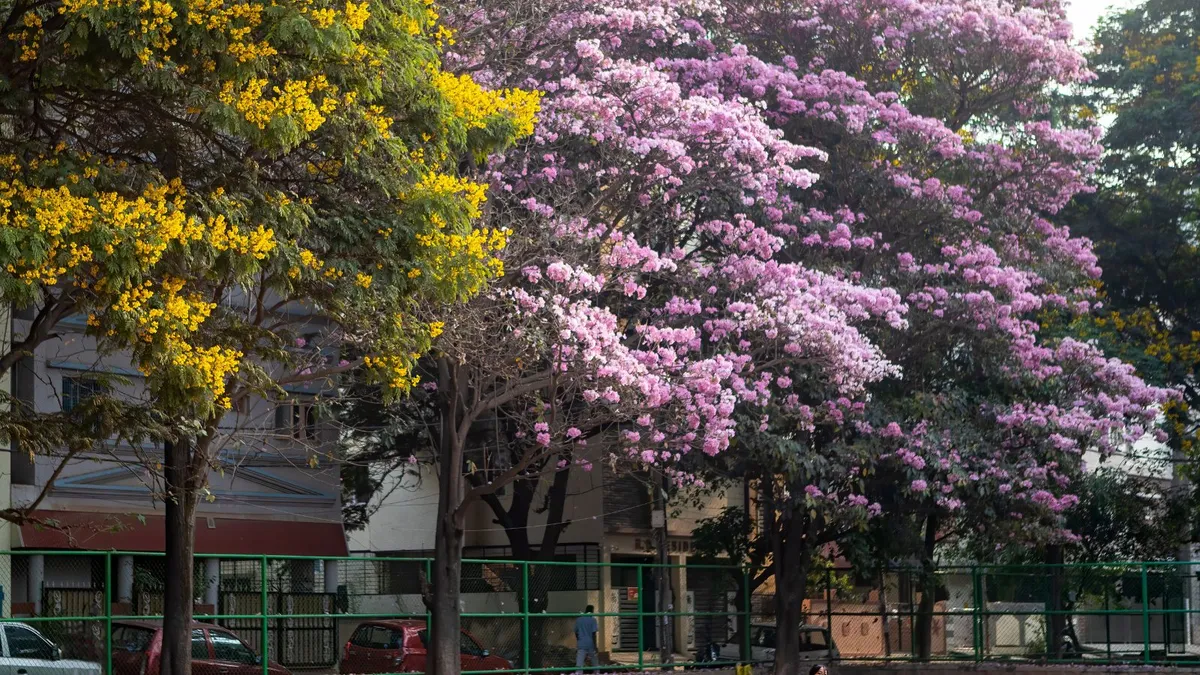
Despite Bengaluru's reputation for jammed streets and loud traffic, the city is adorned with delicate pink blossoms from February to March, which provide a touch of beauty to the otherwise congested scene. Bengaluru is experiencing the season of pink trumpets, which means that the air is delightfully crisp and the dusk glows each evening. In the mornings, the pink blossoms in Bengaluru that adorn the verandahs and bylanes provide a wonderful retreat.
Pink blossoms in Bengaluru- the origins
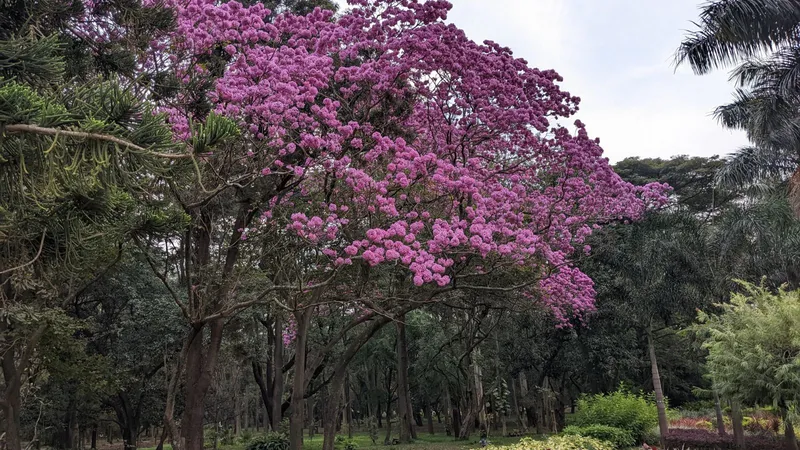
Pink trumpets, or tabebuia avellanedae, are an alien species originally from South America that are sometimes mistaken for Japanese sakura cherry blossoms. It may be unique, but its scenic splendour is undeniable. These pink blossoms in Bengaluru start losing their leaves around the month's end of November to make room for blossom buds. Throughout the season, they flower into trumpets, giving the plant its common name. In the city's gardenscapes, you may also see deeper pink tabebuia rosea and vibrant yellow tabebuia argentea. The colonists who lived under British authority planted neotropical flowers all across the nation to make the streets seem prettier, and this natural beauty is a relic of that period. During the Kingdom of Mysore's reign over Lal Bagh, pioneering botanists like John Cameron and Gustav Hermann Krumbiegel were the ones who initially planted the seeds of these trees.

Floral respite in the middle of urban chaos
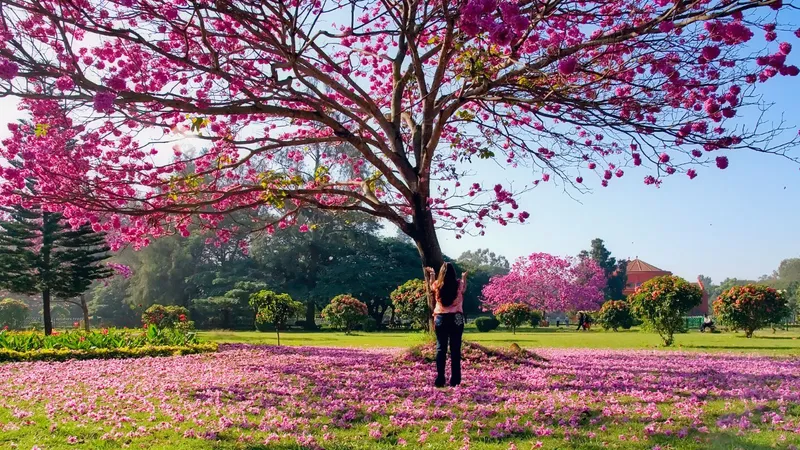
The blaring sirens have finally stopped, and for a little moment, the mayhem of rush hour has been replaced with wonder as they all gaze at the pink flower trees in Bengaluru! The normally absorbed commuters look up in awe as they snap photos of this breathtaking natural phenomenon. The city's seasonal splendour is captured in the many images and videos that abound on social media. How, however, did these trees, which were never native to Bengaluru, come to symbolise the city?
British horticulturists brought pink trumpet trees to India in the nineteenth century, according to botanists. The trees originated in Central and South America. Because of their adaptability to dry, urban environments, they were a great fit for Bengaluru's evolving terrain. As city governments and foresters began to appreciate the trees for their aesthetic value and ecological benefits after independence, their fame grew. They can travel great distances because of their distinctive seed-producing process, which involves flaky coatings. These trees can also withstand pollutants, thrive on soil that is dry soil, and tolerate drought.
The pink blossom trees in Bengaluru thrive in subtropical climates and may have different blooming times between January and April, when the foliage dies back and the blossoms pop forth. These flowers bloom prolifically to draw attention and are suited to be pollinated by larger animals, such as birds. Additionally, these plants are used in their local communities for their therapeutic characteristics. Their bark contains compounds that are effective against both cancer and parasites. Children love tossing the wing-shaped tree seeds into the air and watching them spin as they land. Its resemblance to cherry blossoms in Japan is another reason why it is beloved by the city's youth. Many couples visit places where this tree blooms because it looks like the cherry blossoms in Japan, which are a symbol of love.

Beyond aesthetics: the Tabebuia phenomenon
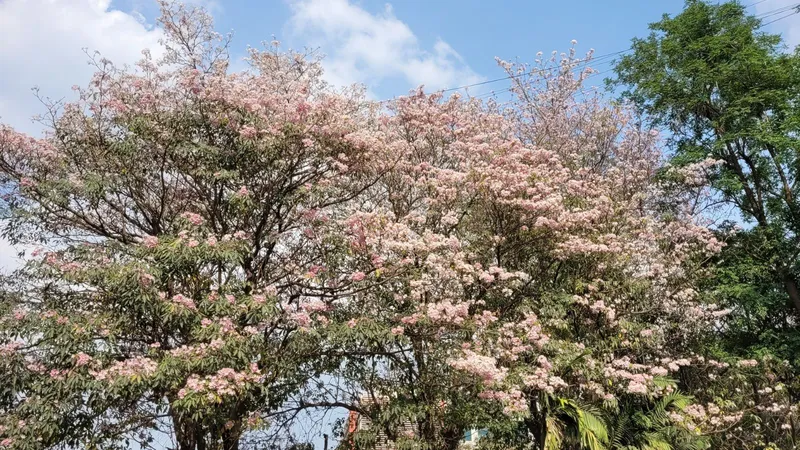
Environmentally speaking, the pink blossom trees in Bengaluru or Tabebuia rosea trees, aren't only pretty. They thrive in urban settings because they can withstand drought and pollution. The wind carries its tiny seeds, bringing the pink blanket back to Bengaluru every year. The yearly blossoming also helps to reawaken the city's connection with the natural world. This eye-catching occurrence serves as a poignant reminder of the need to preserve Bengaluru's status as the 'Garden City.' It comes at a time when rapid urbanisation frequently tramples natural areas. As the streets are adorned with pink flowers, Bengaluru once again proves that nature can triumph over urban disorder. This ephemeral beauty serves as a temporary reminder to the city dwellers to appreciate the little things in life and to stop, look up, and be amazed by the enchantment all around them.

Where to spot the pink flower trees in Bengaluru?
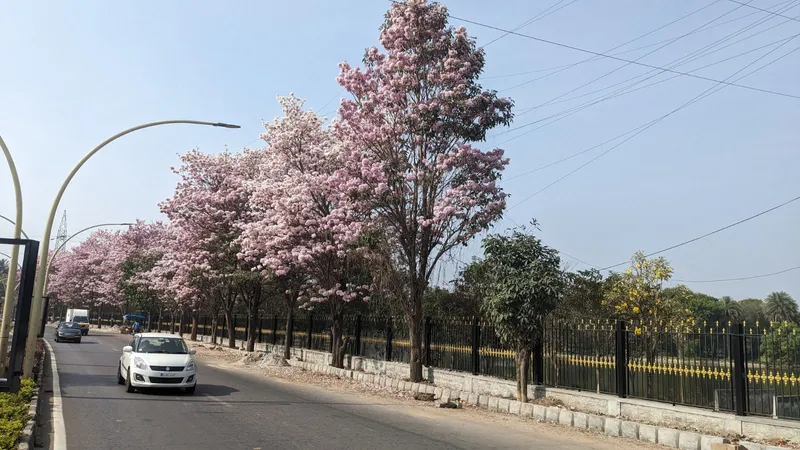
Pink dense canopies envelop the Koramangala, Indiranagar, and Jayanagar regions. Cubbon Park, Ulsoor Lake, and Benniganahalli Lake are popular destinations for Bengaluruans who want to see a kaleidoscope of hues. As the trumpet flowers plummet from the trees that line their roadways, even areas like the AECS Layout and Silk Board, which often conjure up images of piled-up automobiles, are covered with delicate petals.