






 Copy Link
I arrived in Ras Al Khaimah with the muscle memory of the UAE already in place. Glassy skylines, engineered wonder, and the soft hum of all things excess. What I found instead was an emirate that seems quietly uninterested in performing for anyone. There's something so beautiful about the real breathing space here. The mountains seem to sit where they always have been, unbothered by being photographed. The sea doesn't glitter on cue. Even the roads feel unhurried, the desert isn't curated, just present. The Bedouin heritage surfaces, and the hospitality feels instinctive rather than rehearsed. Here, nothing shouts for attention. And that, I realised quickly, was the point.
So, is that intentionally an antidote to other Emirates' energy, we ask. Iyad Rasbey, Vice President, Destination Tourism Development, RAKTDA explains, “Ras Al Khaimah has always embraced a naturally calmer, more grounded rhythm, and that is very much part of our identity. That slower, grounded pace is not a strategy against anything, it’s a reflection of the destination. Our approach in destination development and marketing has been about staying true to what the Emirate authentically offers: expansive nature, cultural heritage, and a sense of space that allows visitors to unwind.” The landscape is complemented by a 7,000-year history and over 80 heritage sites, including four that are on the UNESCO Tentative List, highlighting one of the region’s oldest continuously inhabited settlements.
However, what many visitors to the UAE often overlook is just how diverse Ras Al Khaimah really is. Rasbey says, “While some may picture us as simply a desert emirate, the reality is far richer. Here, you can move effortlessly from serene beaches to lush mangroves and then ascend into breathtaking mountains. All within a short, easy drive. It’s this rare natural variety that makes Ras Al Khaimah proudly stand apart as the UAE’s ‘Nature Emirate’.” Now travellers are beginning to look at RAK less as a day trip from other Emirates and more as a destination in itself. He further shares how there is a growing trend for longer stays, driven by the opening of new luxury resorts. Guests are now spending 3-4 nights in Ras Al Khaimah, turning it into a fully-fledged holiday destination rather than a quick daytrip.
Add to that, a deliberate and long-standing pillar of their tourism strategy - building a destination that is genuinely kids-friendly. With kids effortlessly occupying resorts and beaches alike, it became hard to ignore the feeling that this might actually be a place designed for them. Rasbey, shares, “The majority of our resorts are right on the beach and offer all-inclusive packages, supervised play zones, splash pools, kids’ clubs, family-sized rooms, and interconnecting options that make travelling with larger groups a breeze.” That said, being kids-friendly, doesn’t mean only catering to children; it means providing environments where families can experience things together. Their goal is to offer activities that spark curiosity, encourage exploration, and allow multiple generational families to enjoy the destination together, whether that’s on Jebel Jais, along beaches, or at heritage sites.
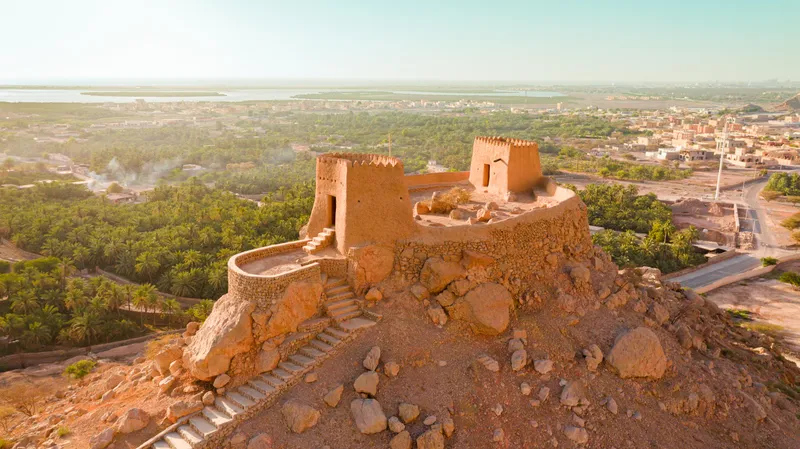
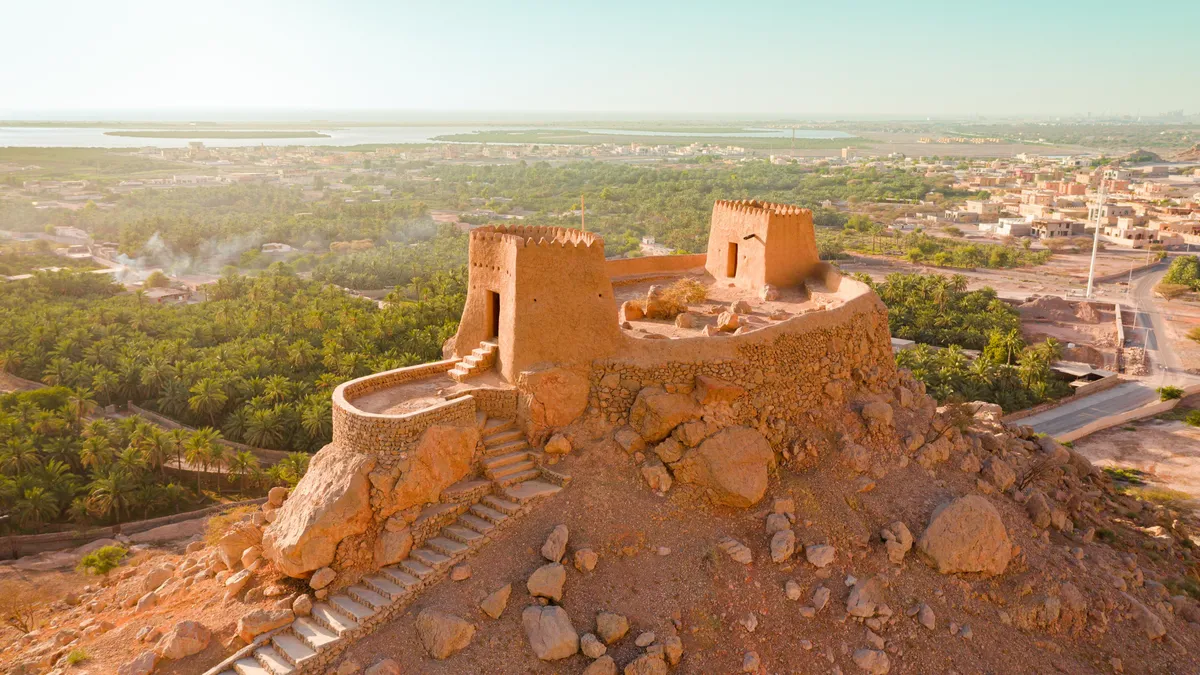
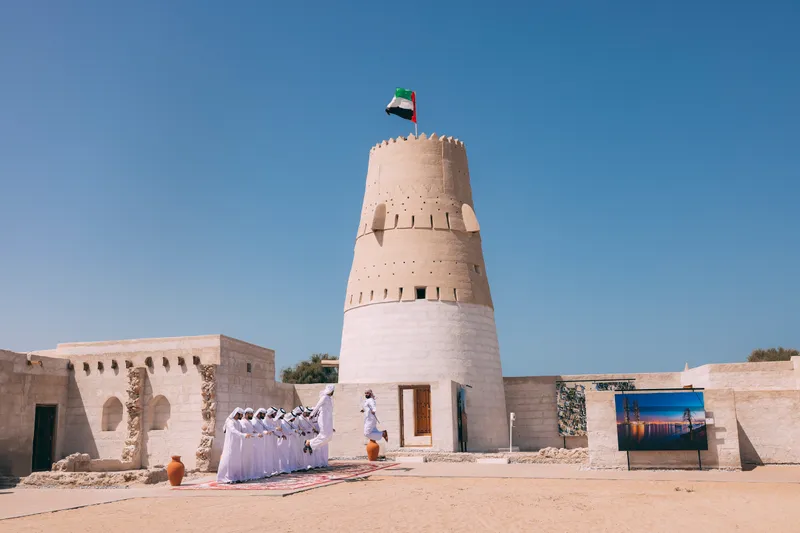
You feel that intention most clearly away from structured settings. Climbing up to Dhayah Fort, for instance, is less about reaching the top and more about what happens along the way. By the time you arrive, you are breathing harder than planned. There's no glass barrier or curated viewing deck. Just wind, stone, and the sense that this fort was built to watch, not to be watched. Similarly, the Al Jazeera Al Hamra Heritage Village felt less like stepping into a pause button on time. There were stone houses, narrow lanes, open courtyards, and spaces designed for shade and conversations. It all felt more like an urge for survival and not spectacle.
Talking about where they draw the line between progress and preservation, Rasbey elaborates, “We believe strongly in a nature-first approach to development. Most of our high-density tourism infrastructure is concentrated on Al Marjan Island, which was designed to minimize environmental disruption. Throughout the mangrove and coastal areas, we prioritise education, wildlife protection, and minimal disturbance in all tourism activities."
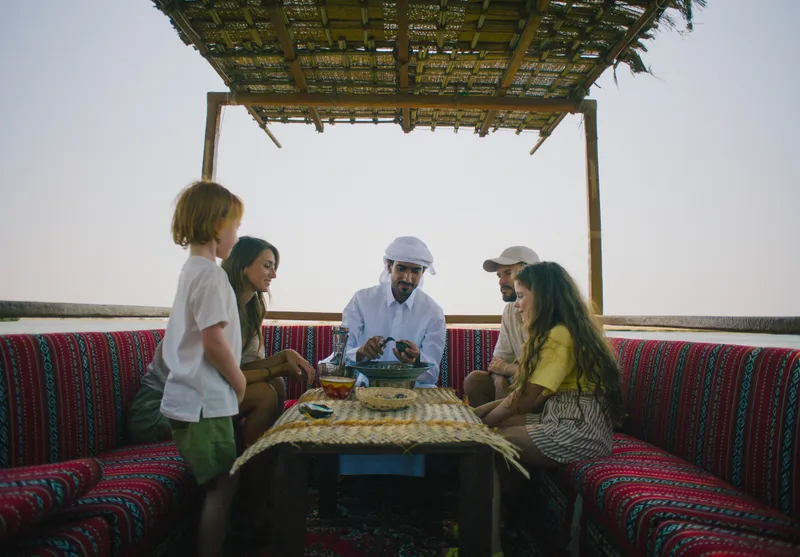
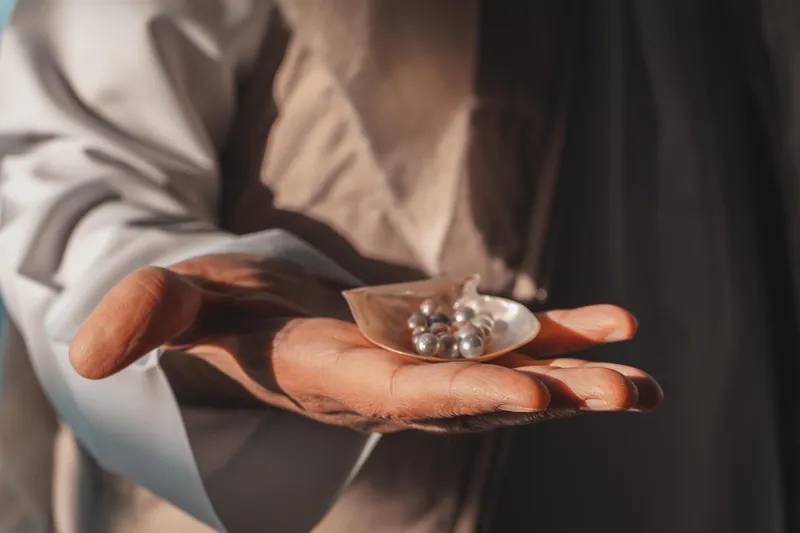
At Suwaidi Pearls, the philosophy reveals itself. Out on the water, with mangroves around us, there was something humble about watching a pearl oyster being opened. So much patience, precision and probability. Little did we know, long before oil, resorts, the idea of the UAE as we know it, this was the economy, the risk, the livelihood. It felt less like an attraction, and more like a chapter on how much of this part of the UAE's story actually began with the sea.
So, once you stop measuring the UAE by Dubai's skyline, you realise how RAK's ambition hasn't been vertical. It has been horizontal, stretched across mountains, wadis, coastline and long quiet afternoons. The shift here, is quite evident. You move from curated opulence to something more elemental, the destination is not competing with its glitzier neighbours. Experineces are shaped from what has been left untouched rather than technology.