






 Copy Link
Snapshots
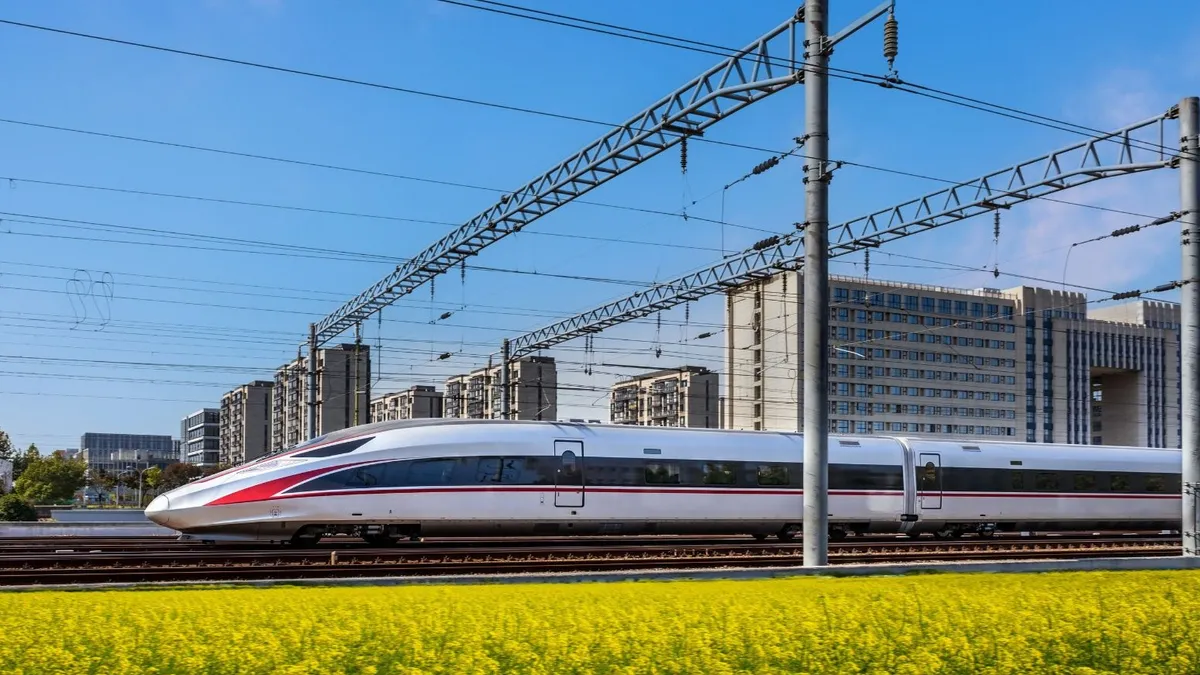
Blurring the boundaries between rail and rocket, the launch of the fastest train in China has set new records by hitting a staggering 450 km/h, establishing a pinnacle in high-speed travel. As the sleek new model poised for commercial service, the latest China bullet train is currently making a breakthrough in not just the domain of transportation, but also making a statement of technological ambition. This China high speed train is transforming longer journeys into mere minutes while elevating rail travel into the future.
China’s fastest train launched
China has officially unveiled the world’s fastest high-speed train that is capable of reaching an astonishing 450 km/h. This launch marks a leap in the domain of the country’s rail innovation. Developed by cutting-edge magnetic levitation (maglev) and aerodynamic technologies, this train represents a fusion of speed, safety, and sustainability. It is expected to operate on major routes connecting key megacities, drastically cutting travel time and boosting economic integration. Beyond the engineering of the train, the project also highlights China’s strategic push to redefine transportation standards.
Key features of China’s high-speed train
With China redefining the future of transportation, the world’s fastest train is a technological masterpiece poised to transform global rail travel. Here are some of the key features of China’s bullet train-
1. Record-breaking speed
Engineered to reach a breathtaking 450 km/h, the fastest train in China redefines the limits of rail travel. Its unmatched velocity transforms long-distance journeys into rapid connections, rivalling even short-haul flights in terms of efficiency and time savings.
2. Advanced aerodynamic design
Inspired by the precision of aircraft engineering, the train’s sleek and streamlined nose and body minimise air resistance, which allows it to glide with minimal friction. Every curve and contour has been meticulously tested in wind tunnels to ensure peak stability and silence, even at near supersonic speeds.
3. Cutting-edge maglev and propulsion technology
The China high-speed train employs next-generation magnetic levitation and propulsion systems that allow it to ‘float’ above the tracks, reducing wear, noise, and vibration. This levitation technology not only enhances passenger comfort but also drastically increases the train’s lifespan and energy efficiency.
4. Intelligent control and safety systems
Equipped with AI-driven monitoring, the train continuously analyses data on speed, temperature, and vibration to ensure optimal performance and safety. Its intelligent braking and control mechanisms can respond to environmental changes in milliseconds, making it one of the safest transport systems in operation.
5. Passenger comfort and smart interiors
Inside, passengers are greeted with a futuristic cabin featuring panoramic windows, ergonomic seating, smart lighting, and real-time travel information. The spacious interiors, noise cancellation systems, and smooth ride create an atmosphere of calm and luxury, redefining what comfort means in high-speed travel.
6. Sustainable and energy-efficient design
Sustainability lies at the heart of this engineering marvel. Built with lightweight, recyclable materials and powered by advanced electric systems, the train minimises carbon emissions while maximising efficiency. This project embodies China’s commitment to green innovation and sustainable infrastructure.
How China’s fattest train compares to other high-speed trains in the world
Here’s how the newly unveiled CR450 AF, designed for 450 km/h, stacks up against the other high-speed trains from around the world-
- Conventional high-speed trains- The current service models of China’s CR400 AF and CR400 BF are rated for speeds around 350 km/h in commercial running, with a design maxima of about 400 km/h.
- Maglev/non-wheel trains- The Shanghai Maglev Train uses magnetic levitation and reached a top speed of over 430 km/h in operations on a short dedicated route.
- European and Japanese high-speed rail- Systems such as France’s TGV POS and Japan’s Shinkansen E5/H5 typically operate at around 300-320 km/h in commercial service. In comparison, China’s high-speed rail speed is much higher.
Top routes on the CR450 high-speed train
Boasting some of the most stunning sceneries that can be experienced at breathtaking speeds in the fastest train in China, here are some top routes to discover on the latest CR450 high-speed train-
1. Shanghai-Chingqing-Chengdu

This east-west corridor through China will allow passengers to board in Guangzhou’s economic powerhouse, Shanghai, and in just a few hours arrive in the mountainous inland city of Chengdu via vibrant Chongqing. Along the journey, you will traverse sweeping high-speed tracks across rivers and plains, cutting time travel dramatically, thanks to CR450’s capacity of 400-450 km/h speeds.
2. Guangzhou-Shenzhen-Hong Kong

A shining jewel of southern China’s economic corridor, this route links three powerhouse cities, those being Guangzhou’s industrial might, Shenzhen’s tech innovation, and Hong Kong’s global finance hub. Travellers can experience the seamless blend of Cantonese culture, futuristic skylines, and international flair, all in the time it takes to enjoy a coffee.
3. Wuhan-Yichang
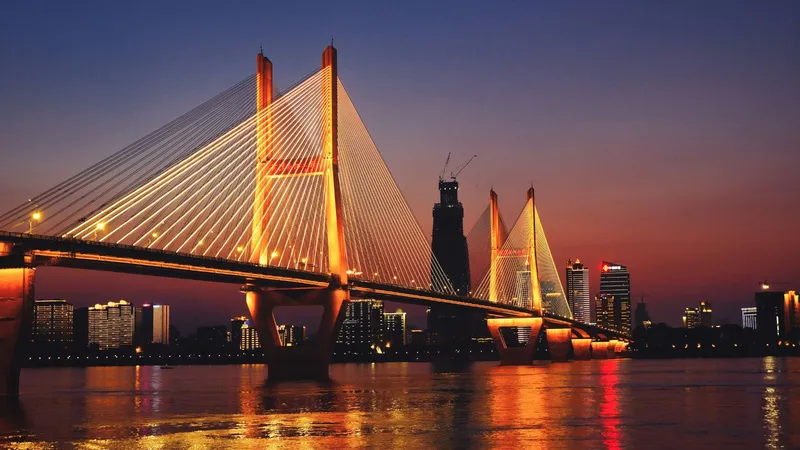
This stretch is already being used for the trials by the CR450, making it one of the earliest segments to benefit from the ultra-high-speed rail. For travellers, this means gliding past landscapes of Hubei province at breathtaking speeds.