






 Copy Link
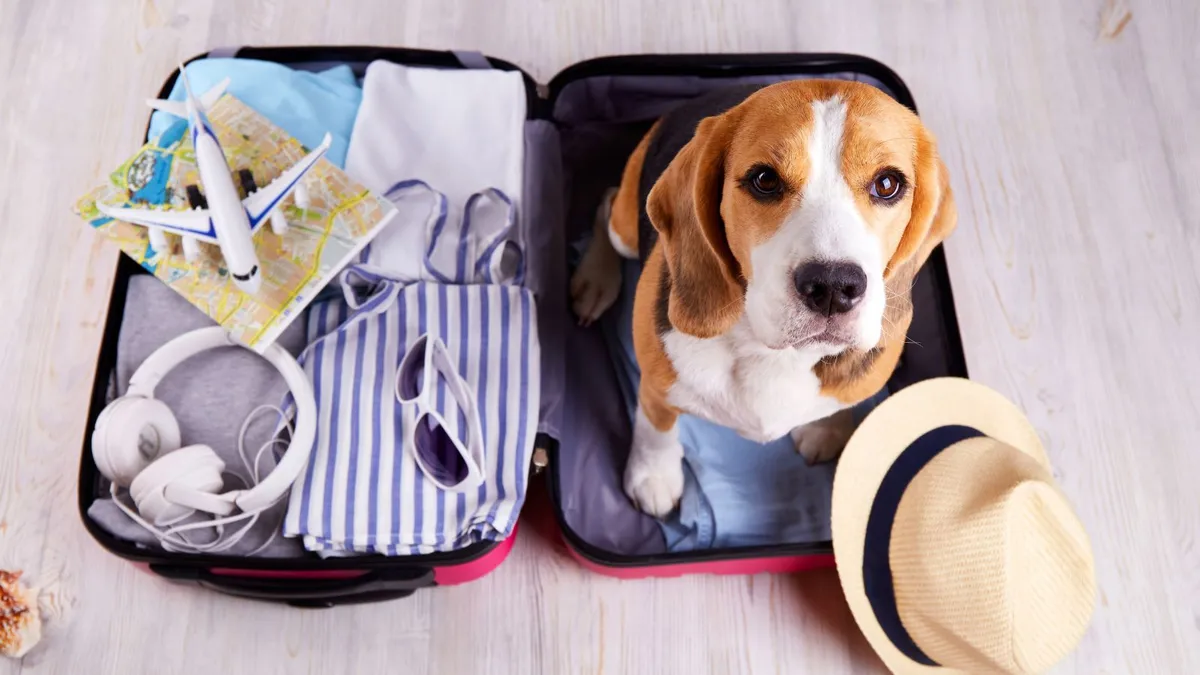
Travelling with your beloved pet—be it a dog, cat, guinea pig, or any other kind of furry friend—is an experience filled with an unexplainable delight. Travelling with a pet requires extensive training, documentation, and important preparations for their safety and well-being. Travelling with pets requires some practice, but once you've done it a few times, you'll be an expert. Dog behaviourists, trainers, vets, and pet owners respect several tried and true methods that we will discuss.
But first, are you prepared to travel with your pet? Ask these questions first!
- Consider your reasons for wanting to take your dogs on a trip before you do anything else. If you're thinking of taking your dogs on a train trip, here are some things to consider beforehand.
- Can they travel comfortably and joyfully?
- Do you think it's a good idea to bring them along, or would someone else be a better caretaker for them while you attend to your business?
- Is the length of the stay sufficient to warrant the trouble and expense of bringing the dogs along?
- Is this vacation within your budget?

Get your pet ready first
Talk to your usual vet before you take your pet on its first long journey. Make sure to choose locations that will challenge them both cognitively and physically while making plans. They should be free to run, smell, prance, and explore anywhere from beaches and woodlands to hills and icy regions, lakes, and even houses with backyards. It should be obvious that you should stay at hotels that welcome pets. You may find a wide variety of accommodations on Airbnb, including some with private, open areas, so it's easy to find the perfect fit for your pet. However, nowadays, many hotels and resorts, including pitstop hotels, allow dogs. Rather than relying on last-minute cold calls, it's advisable to make a reservation in advance. Looking for more ways to prep your pet? Here’s what you need to do!
Train your pet well
Puppies need to learn the four fundamental commands of sitting, staying, coming (to recall), and settling down. Before the trip, they need to undergo training and rehearse in various environments with various distractions. For instance, you may tell your dog to "stay" in the car before getting out, or you could leave him in the car while you get out.
Get your pet comfortable with confinement
When planning a trip with your pet, it's best to confine them for the duration. Whether it's in a vehicle or a restaurant, there will be occasions when they need to be contained, either in a cage or on a leash. Your dog will be able to travel in comfort and ease if you follow these steps. Begin with one-minute sessions at home and gradually increase the time to help them adjust to confinement. Two or three months before your trip, start crate training. In addition to learning to enter the crate when called, your pet also needs to learn how to rest inside it for long periods. If you've successfully crate trained your pet, travelling with them will be effortless. In the case of cats, the phrase refers to the carriers that will be used during their flight. As a first step in training, leave the door of their box open so they may come and go as they like. Begin nighttime crate training gradually, eventually relocating the cage to a different room. Using the crate as a form of punishment is unacceptable. The container should always represent joy in their eyes.

Flight charges for pets in India
Whether you use the free luggage allotment or not, you will incur standard excess baggage costs per item. The free baggage allowance does not apply to the carrying of pets, nor does it include the weight of containers or pet carriers. The excess baggage tax is influenced by the weight of your pet, the weight of the container (kennel, cage, bag, etc.), and the weight of the pet's possessions (food, etc.).
What paperwork do I need for my pet?
- No later than 72 hours before the departure date, you are required to have on hand valid vaccination and health certificates (properly signed and stamped) from the sanitary department certifying that the animal is in good health.
- Proof that the animal has had a rabies vaccine from a licensed veterinarian is required.
- Save the indemnification form to your computer and fill it out. Make sure to complete and bring two copies of the indemnification form for direct flights.
- At the time of check-in at airports, please present both the original and a photocopied papers.
Pet-Friendly Flights in India
Currently, Air India and Akasa Air are the two pet-friendly flights in India, streamlining pet travel by air in India! Here’s what you should know before you step in the plane.
Things to remember when getting your pet on the plane!
- Your beloved canine should not travel without a muzzle and a leash.
- To travel in the cabin, your pet must be at least eight weeks old. To travel in the cargo hold as checked luggage, it must be at least three months old.
- The cottage is pet-friendly and welcomes all kinds of felines and canines. However, certain breeds, such as those with snub noses or flat faces, may pose a risk when transported in the trunk. Hence, they can't be transported in the goods hold. They advise consulting a veterinarian before bringing any of these endangered breeds inside the lodge. If any problems emerge, please be informed that we will not be held responsible.
- The following factors determine whether your pet may travel in the cabin or the cargo hold:
- As long as the pet and its container don't weigh more than 7 kg (15 lb), they're OK to go in the cabin.
- The pet and its container may be transported as checked baggage as long as their total weight is more than 7 kg/15 lb but less than 32 kg/70 lb.
- It is necessary to transport the pet as cargo if its total weight exceeds 32 kg/70 lb, including the container.
- The pet must be contained in a padded, air-ventilated cage or sack that does not exceed the following dimensions: 46 cm x 46 cm x 30 cm/11 in.
- There is a two-pet cabin limit per flight, following DGCA regulations. Furthermore, a human must accompany every pet.
- Put an additional absorbent pad at the bottom of each pet's kennel, bag, or cage and mark it for safety reasons. Please bring along more absorbent mats so that the pet can relieve itself during the journey.