






 Copy Link
Snapshots
You shouldn't give up exercising outdoors just because the weather has turned cold! Here’s why we explain that exercise in winter is the best thing that you can do for your body!
Several advantages of winter exercise are absent in the summer. It's possible that being chilly provides you with more endurance. With less exertion from your heart, less perspiration, and less overall energy expenditure, you can get more done in lower temperatures. Research has also demonstrated that exercising in cold weather can cause white fat, primarily found in the abdominal and thigh regions, to convert into brown fat, which burns calories.
The sun's rays, which winter exercises provide, may also benefit those who suffer from seasonal affective disorder (SAD), a form of depression that is more common in the winter. Cold-weather exercise is generally safe for most individuals, but those with asthma or heart problems should talk to their doctor about any extra measures they need to take.
Why winter workouts are the best thing for your body
Despite the depressing nature of venturing outdoors in such subzero temperatures, there is always a positive aspect to it. A cooler (within reason) environment may make your sweat session more pleasant and longer-lasting, as exercising raises your core temperature and blood pressure. Temperatures closer to 45 to 55 degrees are optimal for running a race, unlike a picnic or day at the beach, where temperatures around 70 to 80 degrees are more pleasant.
The cold may be uncomfortable at first, but you'll likely find it more bearable as you spend more time outside. Actually, your body will begin to adjust so that you are more comfortable in cold environments if you intentionally expose yourself to them for as little as 11 minutes each week.
_1735226831357_thumb_300.jpeg?w=800&f=webp&t=63ebea595bfbf472)
Make sure you’re safe when working out outdoors
Exercising in subzero temperatures is not without its hazards. Both major issues, like as hypothermia and frostbite, which are uncommon if you have the proper protective gear, and minor ones, like slower reflexes, ought to be considered. Wearing warm clothing is the surest defence against colds. Wear thermal clothing, keep your exposed skin to a minimum, and make sure you have terrain-appropriate footwear.
The correct footwear can greatly enhance your safety when venturing out in cold weather, as ice, snow, and other potentially hazardous surfaces can be present. An expert piece of advice for working out in chilly weather is to wear multiple thin layers, which you can remove as the weather warms up. Do not go out in subpar clothing and hope to warm up; instead, remove a layer if you feel yourself becoming too hot.
Regardless of clothing, some people should exercise additional caution or not at all in cold weather. Doctors warn that anyone with neurologic or vascular disorders, as well as those with cardiac issues like arrhythmias, hyperventilation, irregular heartbeats, or a history of heart attacks, should exercise caution when exposed to cold shocks, such as cold plunges. On top of that, cold weather may make asthma symptoms worse for some people.

If you intend to exercise in cold weather, you might not initially be able to exert yourself to your maximum capacity. Medical professionals advise gradually exposing yourself to the elements, starting with half of your usual activity. Just remember to warm up before you start. To get your blood pumping and sweat flowing before you leave the house, do something energetic and light.
The best warmup for winter workouts
Warming up before a cold-weather activity will protect your muscles from strains and injury. To avoid injury, don't start with static stretches, which don't move the affected body part. More dynamic stretching techniques that maintain moving sections of the body can achieve joint lubrication, blood circulation, and tissue and muscle warming.
Consider incorporating the following pre-workout regimen:
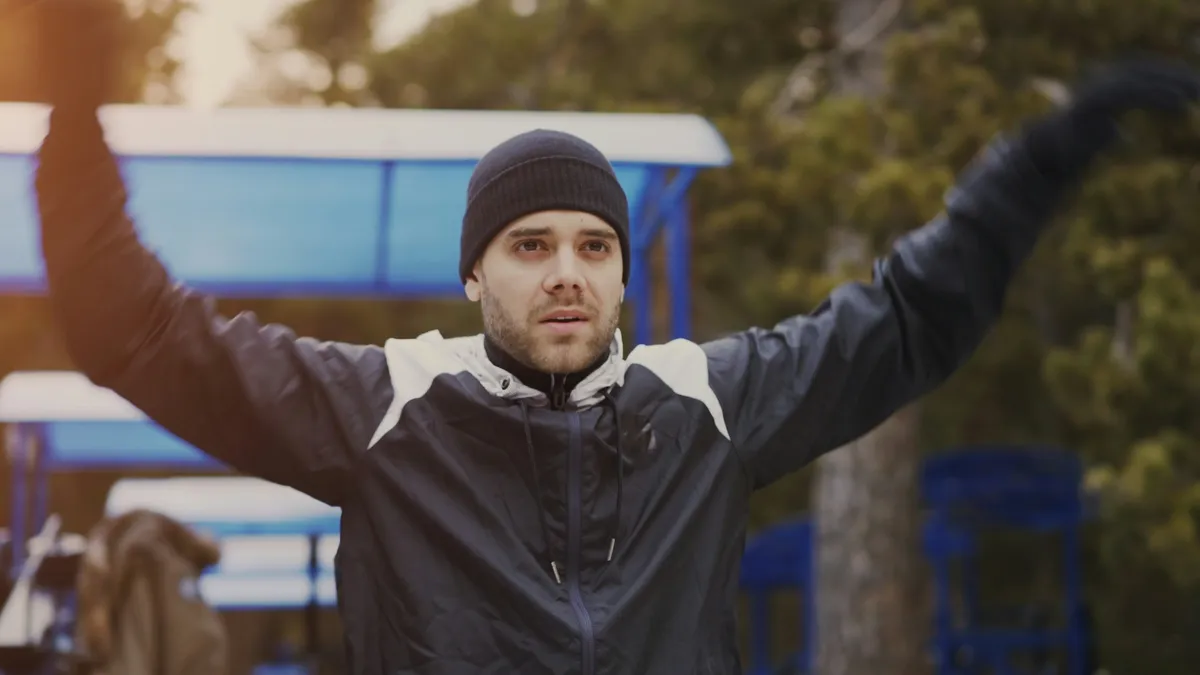
- Perform arm circles by raising your arms overhead with palms facing down. To make 20 circles, start with a small circle and increase its size. After that, continue making progressively smaller circles until you've finished 20 in all.
- Do a series of right and left arm swings while twisting at the waist. Stand with your feet wide apart and your arms in a coordinated motion. Continue this pattern until you've swung ten times in total, five times in each direction.
- How to stand for high steps: Spread your toes wide. Bring your right knee up to your chest while you raise it (you can use a wall as a balancing aid or wrap your hands around your knee if necessary). Once you've held for a second, go back to where you were. Switch to your left knee and repeat the motion. Keep going until you've elevated your knees five or ten times on each side.
- To do a lunge, stand on a stance with your feet together and, while bending at the knees, take a step forward with your right foot. Return to your starting position and switch your legs, placing your left foot in front this time. Perform the steps five to ten times back-to-back.

The best winter workouts to try this year
- Boxing: Boxing is a fantastic wintertime activity to attempt if you'd rather exercise indoors. It is a terrific way to improve cardiovascular health and alleviate stress. Particularly for mental health, research has linked boxing workouts to improvements in strength, coordination, and decreased anxiety and depressive symptoms.
- Brisk walking: If you're looking for a low-impact activity to work your lower body, walking is a great choice. Among its many advantages are enhancements to cardiovascular health, bone density, energy levels, balance, and coordination. Just throw on your warmest layers and go for a stroll outside—or use the treadmill—if you prefer. There is some evidence that walking in a group can have positive effects on health, both mental and physical, and that it can encourage people to exercise more often.
- Yoga and Pilates: If your hip flexors or hamstrings are tight in winter, it may be due to less activity than in warmer months. This is why practising yoga or Pilates in the winter is so beneficial: They can assist in combating that lack of movement by promoting flexibility, mobility, and strength. The stretching that is a part of both can be a wonderful alternative to other high-impact winter sports as a kind of cross-training.