






 Copy Link
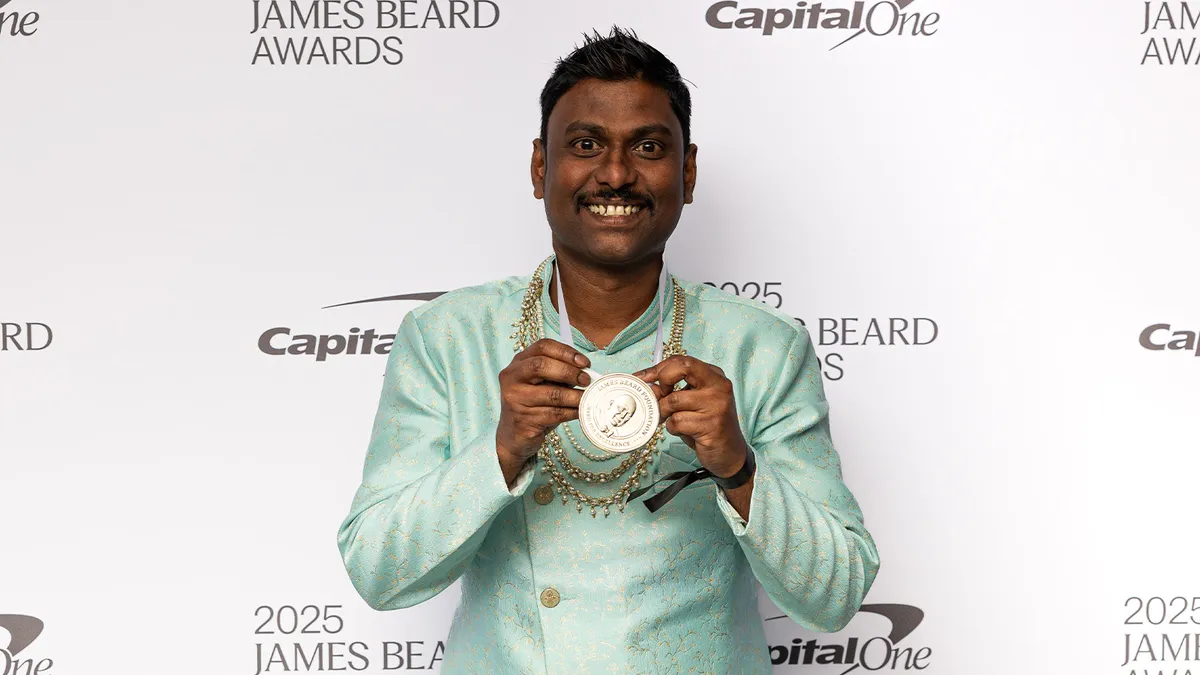
When Chef Vijaya Kumar of Michelin-starred NYC restaurant Semma took the stage at James Beard Awards, he didn't have a polished thank you list handy. Instead he looked out at the room and said, “I never thought a dark-skinned boy from Tamil Nadu would make it to a room like this.” It wasn't an ordinary statement. It was a small act of defiance, soaked in memory and truth. In that moment, he wasn't just accepting an award, he was kicking down a door, making space for the cooks who never thought their food, or their skin, or their stories belonged under the spolight. And the food he's brought with him, doesn't apologize for where it comes from.
_1753355637556.jpg?w=800&f=webp&t=fc4b9fea97a06412)
To understand Kumar's food is to understand where he began. Quiet, smoke-scented mornings in rural Tamil Nadu, where the sizzle of mustard seeds in gingelly oil was the soundtrack to life. His strongest memories aren't of feasts, but of restraint. Dishes such as keerai masiyal, mashed greens with dal and a final lick of garlic oil, made by women who knew how to pull flavour from very little. It's this food, humble, intense, slow-cooked over fire that now fills plates at Semma in New York. Not reinterpreted, not softened for a Western palate. Just served straight with context and conviction.
Edited excerpts:
1. Growing up in Tamil Nadu, what are some of your most vivid food memories? Is there a particular smell or dish that instantly takes you back home?
Growing up in Tamil Nadu, mornings were quiet but full of subtle sounds and smells. For me, it’s always the smell of woodfire smoke mixed with tempered mustard seeds that takes me back. If there’s one dish that takes me back, it’s keerai masiyal, simple greens mashed with dal, finished with garlic and ginger oil. The quiet, everyday dishes always take me back.
2. You often talk about ‘unapologetic rural Tamil cooking’. What does that phrase mean to you personally?
When I say ‘unapologetic rural Tamil cooking,’ I mean letting those flavours stand on their own, exactly as they are. It means cooking without compromise and keeping the food I grew up with bold, simple, and honest.
3. In what way did your mother or grandmother shape the way you view food today?
Everything I know about food started with them. My mother and grandmother taught me that cooking isn’t just about recipes, it’s about patience, discipline, and respect for the ingredients. They also taught me to value simplicity, that a dish of just greens, dal and spice can feel complete.
4. Rural Tamil cuisine is often misunderstood or overshadowed. What is the most misrepresented part of Tamil food in the global culinary scene?
People often think Tamil food is just dosa, idli, and sambar, but that’s restaurant food. Tamil cuisine is heavier on millets, foraged greens, country chicken, freshwater fish, goat, and dishes cooked slowly over woodfire. Overall it is sharper, more aggressive, not at all soft or mild.
_1753356239424.jpg?w=800&f=webp&t=9395bc2b0a51ffc4)
5. How do you navigate the balance between preserving tradition and adapting dishes for a New York palate?
What I focus on is explaining the food, giving the guests context. I explain why a dish is sour, why something is fiery with black pepper, why gingelly oil is used instead of ghee. People in New York are curious, they’ll be more open to trying things if you’re honest with them. I trust the food to speak for itself, my job is just to help them listen.
6. When you held the James Beard Award in your hand, what was the first thought that flashed in your mind?
That moment felt bigger than me. Holding that award, it felt like all the people who cooked that way were finally being seen and respected. It was a proud moment.
%20(1)_1753355887831.jpg?w=800&f=webp&t=94ba6b66bcfa59ba)
7. You said, “When I started cooking, I never thought a dark-skinned boy from Tamil Nadu would make it to a room like this.” That’s such a powerful statement. What made you feel that way and how did you overcome that sense of limitation?
That’s the reality I grew up with, that dark skin often meant you were seen as less. Opportunities felt small, and dreams felt like something other people had. I didn’t necessarily overcome that feeling, I carried it with me, and it kept me grounded. Even now, standing in a room like that, I don’t feel like I’ve arrived. But I do feel like I’m representing everyone who was never expected to stand there. That’s why I cook the way I do, not to fit in, but to remind myself where I come from.
8. What does this recognition mean for young chefs in India especially those from rural or underrepresented backgrounds?
I hope it tells them they don’t need to change who they are to be seen. They don’t need to leave behind their village food, language, skin colour, or story to succeed. Cook what you know. Stand by it. Let the food speak.