






 Copy Link
When was the last time you checked into a hotel specifically with the purpose of getting some restorative sleep? If the answer is ‘never’ then you are probably among the lucky ones who get a good night’s rest and sleep soundly. But for millions battling sleep deprivation in a world of tight deadlines, pings, social media notifications and constant stress, sleep tourism has emerged as the new saviour and one of 2025’s biggest wellness trends.
What is sleep tourism?
Call it sleepcation, nap-cation or dream tourism, hotels in India and across the world are curating vacations to address the sleep epidemic as people check into hotels and resorts not just to revel in its luxury or to explore a destination, but simply to focus on deep recovery and rest.
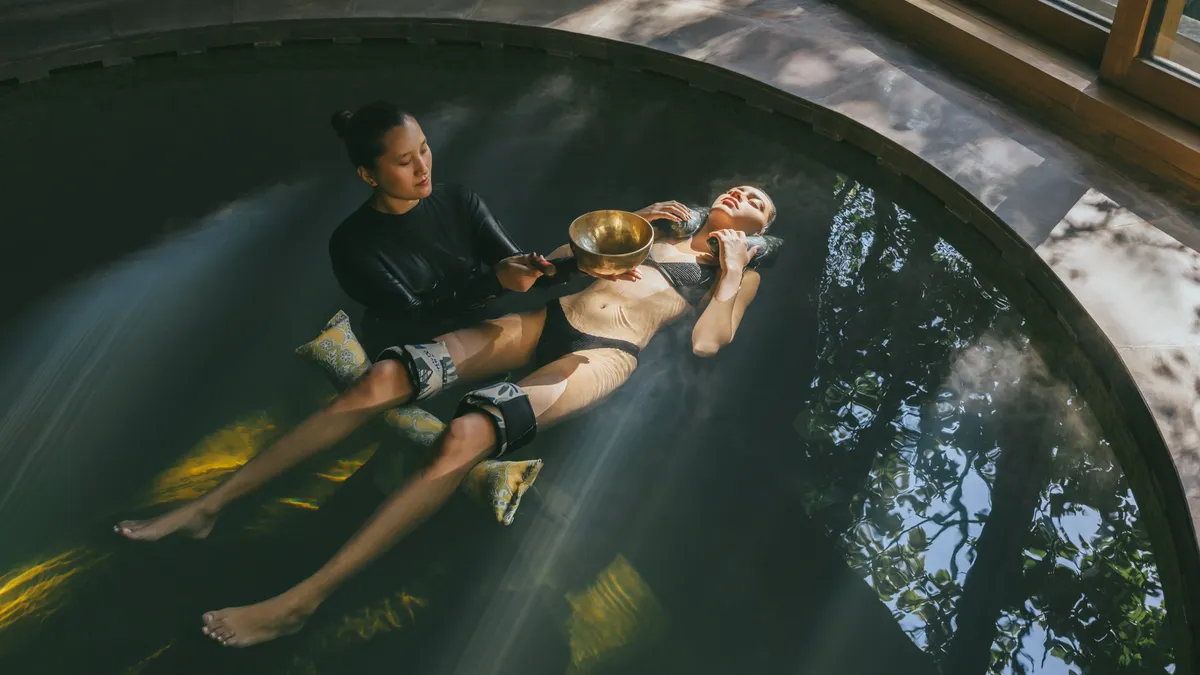
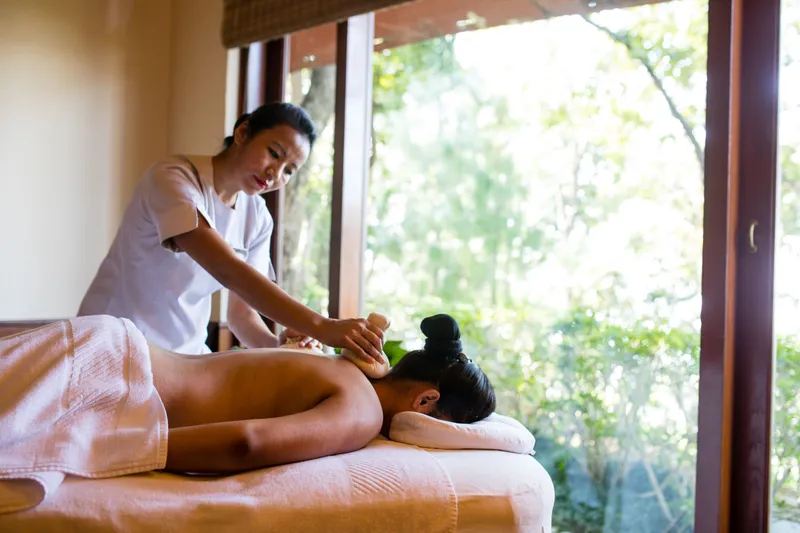
It’s not just about a good night’s sleep by offering pillow menus. Think silent zones, sleep-inducing spa treatments, luxury sleep programs and even virtual-reality lullabies, all created through different approaches – some rely on science backed programs, while others delve into ancient therapies.
There are many resorts and luxury hotel brands who are doing this like Ananda in the Himalayas, Atmantan Wellness, Soneva, Hilton, Four Seasons, Conrad, Six Senses. Some are located in buzzing metropolises like New York and London while others are in quiet locations amidst natural settings. The cutting-edge sleep experiences they offer range from five to seven days and can even go as long as three weeks.
What hotels are doing
Unsurprisingly, in India many retreats rely on Ayurveda to create change and help guests. At Six Senses Vana in Dehradun, backed both by ancient wisdom and contemporary sleep science, the Sleep Wellness Program is personalised for each guest after a wellness screening to assess their body composition, lifestyle patterns and energy rhythms. “It may include Ayurvedic consultations, yoga nidra, pranayama, Tibetan therapies, circadian-aligned nutrition and the use of a Sleep Tracker and curated sleep kit,” says Dr. Arun Pillai, Wellness Director, Six Senses Vana.
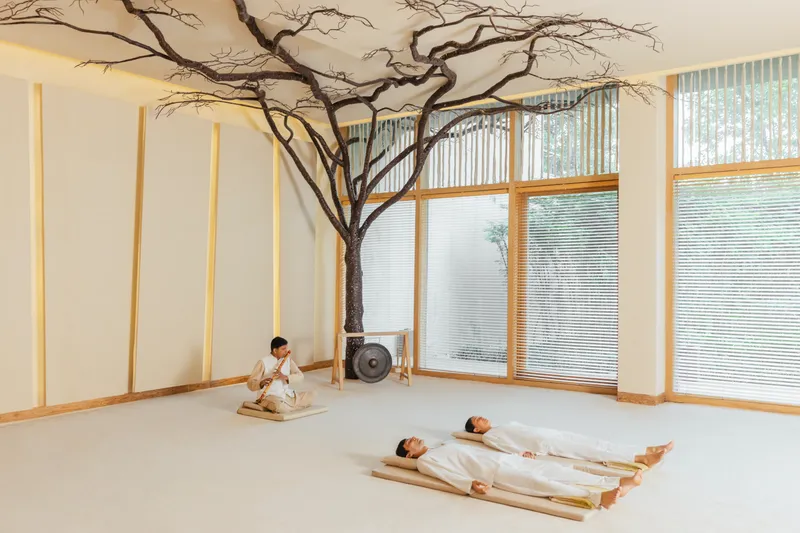
The surroundings are also thoughtfully designed – with sleep-enhancing mattresses, a pillow menu, mindful teas, digital detox and experiences like sound healing, raag therapy and guided nutrition.
Many of the hotels curating sleep programs lie in calming areas – be it the Himalayas in India, Maldives or Bali. For example, Conrad in Bali has a SWAY sleep therapy where guests are cocooned in a hammock and gently rocked into deep relaxation.
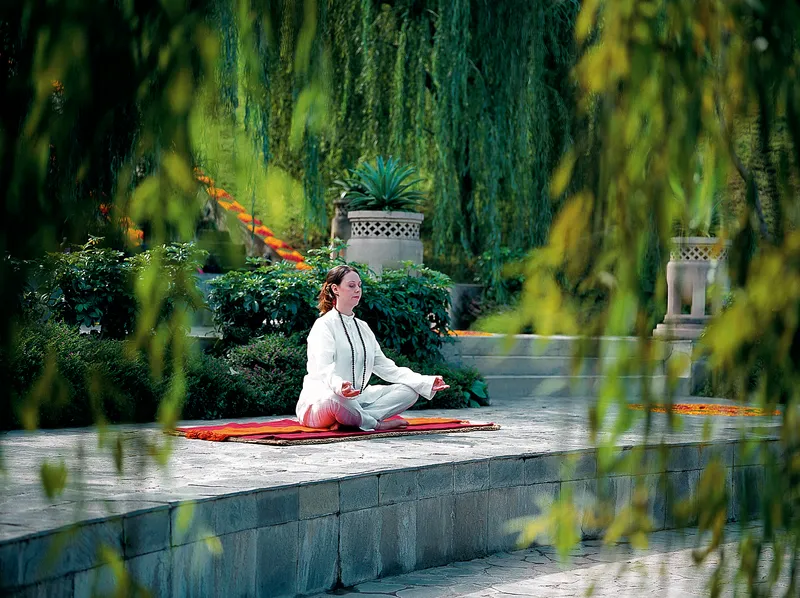
Ananda in the Himalayas was one of the first hotels in India to introduce an extensive Sleep Enhancement Program that ranges from one to three weeks. “A lot of factors go into getting a good night’s rest. We have sleep assessment machines where we figure out what the body is trying to do at night and then tailor a program for the guest,” explains Dr Sreelal Sankar, Head of Ayurveda at Ananda in the Himalayas. The purpose: to calm the nervous system.
Where technology and AI fits in
Luxury hotels are bringing a tech twist to the movement. In busy London, The Kimpton Fitzroy, is one of the world's first hotels using AI to help with sleep.
It has a ‘Room to Dream’ experience where they encourage guests to write or journal about their dreams and tap into the subconscious with the help of lucid dreaming which according to scientific research alleviates anxiety. Along with a journal to jot dreams, they get a VR headset with AI immersive visuals that take them through a soothing environment.
Equinox Hotel in New York City has gone one step ahead by introducing Sleep Lab rooms where every single element is tailored to make sure that sleep is the priority. Designed by sleep scientist Dr. Matthew Walker, this includes morning and evening rituals, spa treatments, a menu with sleep-inducing food and beverages, adaptive mattress technology and more. The temperature, lighting, sound and ambiance in the room is also tweaked to suit the sleep pattern while a Contrast Therapy Shower with steam and ice showers prepares the body for a good night’s rest.
How it helps the guests
The goal of sleep tourism isn’t just restful nights during a stay – it’s teaching practices guests can take home. At Mulberry Shades Bengaluru Nandi Hills, the sleep program combines mindful daytime practices with calming evening rituals to create the right environment for natural sleep and help guests disconnect from daily pressures. “Guests wake up feeling refreshed, balanced and more attuned to the calming surroundings of Nandi Hills, a benefit that often lingers well beyond their stay,” says Dushyant Singh, Hotel Manager, Mulberry Shades Bengaluru Nandi Hills.

The various techniques taught to the guests are meant to be followed by them when they get back home – be it meditation, yoga or breathing techniques. For example, at Six Senses Vana the program gently recalibrates the nervous system - supporting melatonin production, balancing stress, and addressing emotional or lifestyle-induced restlessness.
“Many guests arrive carrying the weight of disrupted routines, burnout, or a constant state of ‘on.’ The Sleep Program offers more than deep rest. Guests often report not only improved sleep but a sense of calm, lightness, and presence that stays with them long after they’ve left, ” says Dr. Arun Pillai, Wellness Director, Six Senses Vana.
As stress levels rise and the consciousness of the importance of sleep grows, the number of people signing up for such programs is rising as sleep tourism emerges as the new face of luxury travel. After all, in a world where everyone is chasing experiences, sometimes the greatest luxury is simply to wake up truly rested.