



 Copy Link
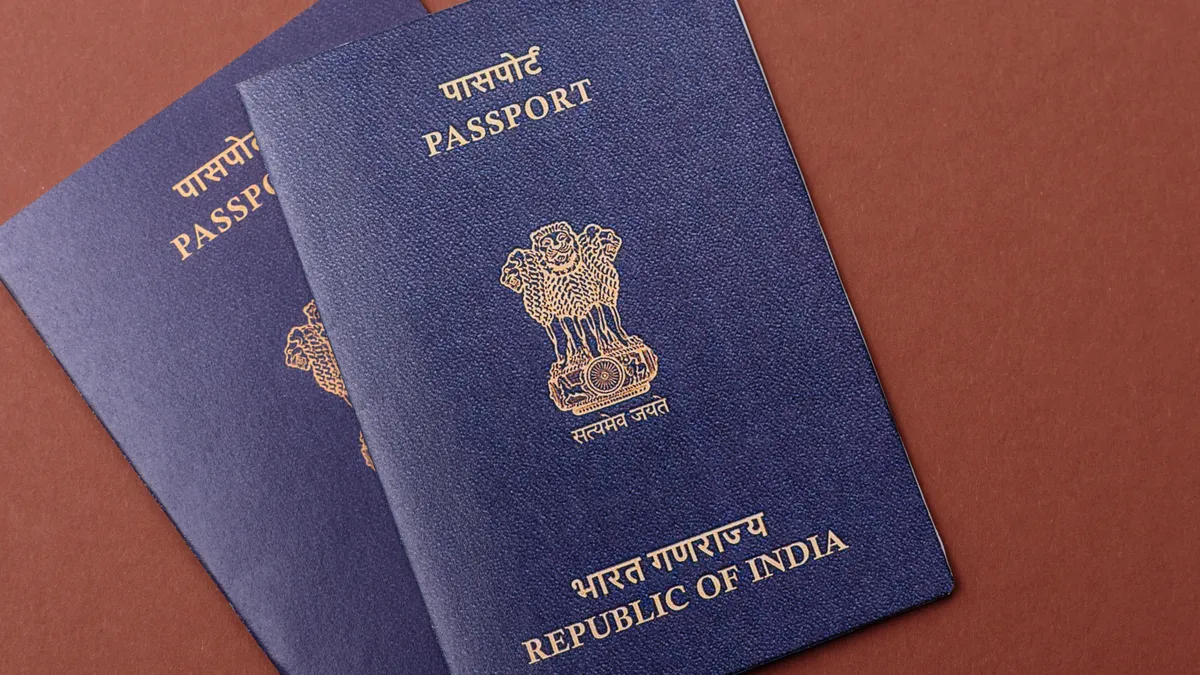
Passports, issued by the Indian government in accordance with the Passport Act of 1967, are required documentation for Indian citizens to prove their citizenship. The country's Ministry of External Affairs issues foreign passports. Many nations allow Indian passport holders the option to visit visa-free or with a visa upon arrival. The traditional navy blue passport and the more modern electronic passport are two of the many varieties of Indian passports. But what are passport colours in India, and how do they impact the types of Indian passports? We discuss all, so keep reading!
Passports are essential for travelling internationally and serve a purpose beyond that of a simple travel document. There are four passport colours in India—blue, white, red, and orange—that indicate the traveller's status or the reason for their trip, just like in many other countries. To aid immigration officers quickly, each colour represents a different function. Over the years, the Ministry of External Affairs has managed India's passport system in accordance with the Passports Act of 1967, leading to several changes. The recent introduction of e-passports with biometric chips has made foreign travel for Indian nationals faster, safer, and more convenient.
Passport colours in India—why it’s important
The passport colour in India conveys crucial information instantly, regardless of whether the travel is for pleasure, business, official obligation, or employment. Colours blue, white, red, and orange are used to denote different types of travel: personal, official, diplomatic, and ECR. International travel is now easier, safer, and more efficient thanks to this system and contemporary biometric e-passports. Cutting-edge technology and well-defined categories have brought India's passport system up to international standards, enabling officials, citizens, and diplomats to travel abroad with confidence and ease.

Passport colours in India
- Blue Standard passport, often known as Type P: The majority of Indian passport colours are navy blue and are provided to ordinary individuals for purposes of business, tourism, and education. Through the normal application procedure, any citizen of India is eligible to apply for this passport. For those under the age of 18, it remains good for five years, while adults can enjoy it for ten. A 'Type P' passport, with the letter 'P' standing for 'personal,' is another option. The following documents are required of citizens in order to apply for a blue passport: a birth certificate or other valid photo ID, evidence of domicile (such as a power bill or a rental agreement), and proof of nationality. These conditions ensure the security and efficiency of the issuing procedure.
- White official passport, often known as Type S: Government officials, bureaucrats, and others who travel overseas for formal diplomatic business are issued the White passport. Those in government who do not have full diplomatic status are the intended recipients. Normally, this passport is good for as long as the official assignment lasts. The "S" in "Type S" refers to the applicant's military service. A secure electronic passport equipped with an RFID chip is now issued, similar to the blue passport, to deter tampering. This passport is considerably more difficult to obtain. A valid photo ID, a departmental duty certificate, a formal forwarding letter, and approval from the PMO are all required documents for applicants. To make sure official travel is safe and well-monitored, certain measures are put in place.
- Green Passport for diplomats: Diplomats, consuls, and other high-ranking government officials, such as those in the Indian Foreign Service, are granted the maroon passport. Holding a diplomatic passport provides expedited clearance at foreign customs and immigration. The only recipients are a diplomat and their immediate family. The security and worldwide acceptability of red passports are further enhanced by their issuance in electronic passport format. The rigorous verification process for a diplomatic passport application includes the submission of official identification, duty certificates, forwarding letters, and PMO clearance. Only permitted individuals will be able to access sensitive diplomatic travel information.
- Orange or Passport for ECR: Citizens of India who are designated as Emigration Check Required (ECR) are awarded the orange passport. People in this group sometimes have not met educational requirements or are going to nations that require special permission for their job. If a passport is orange, it indicates that the bearer must complete additional immigration processes before leaving the country.
Other types of Indian passports
- Certificate of emergency (gray): If an Indian national residing abroad loses or has their passport stolen, they can apply for a gray emergency certificate. It enables people to return to India in case of crises, but it is not a full passport. The Indian embassy and consulates issue this certificate, which is valid for a single journey.
- Electronic travel documents: An electronic chip, found in e-passports and also called biometric passports, stores the passport holder's information, including biometric data like fingerprints and iris scans, among other pertinent details. To make its travel documents more secure, India implemented e-passports. These passports include built-in security mechanisms that make them impossible to tamper with.
Want to know the latest revamp to the Indian passport? Click to know more: