






 Copy Link
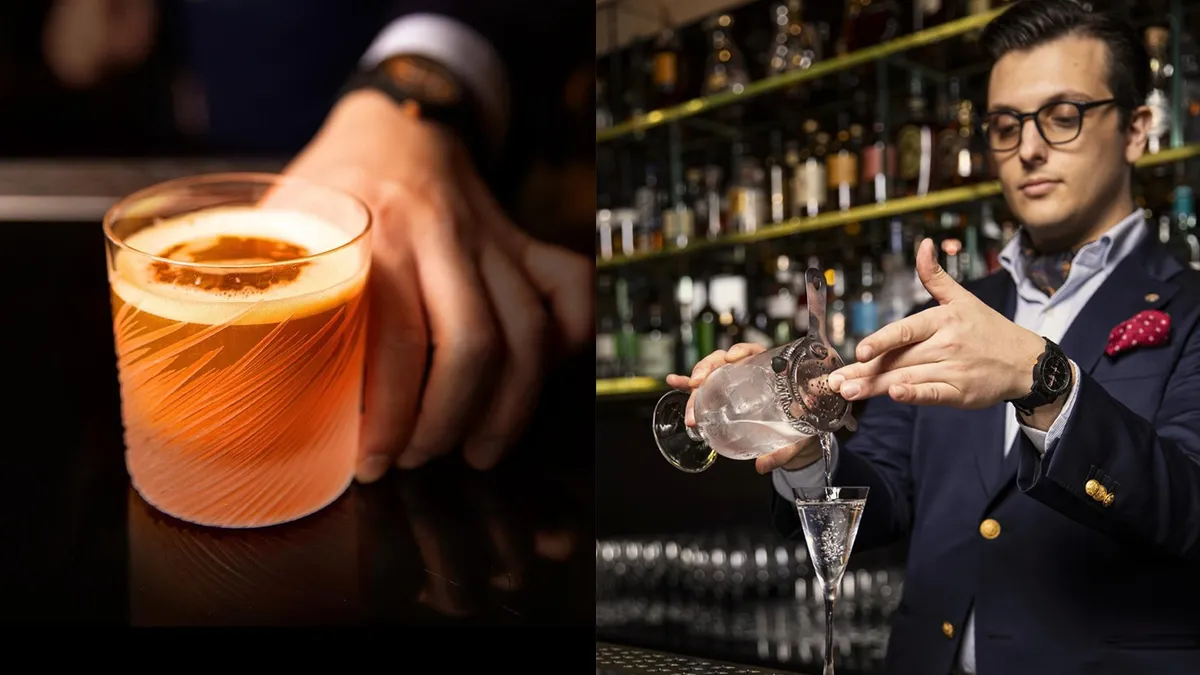
An Italian native, Simone Ciambrone’s passion for hospitality began early in life, with his first job at just 14. He then proceeded to London, where he honed his skills at some of Mayfair's prestigious hotel bars including The Donovan Bar, under the legendary Salvatore Calabrese, all while earning a degree in Hospitality Management. This formative experience laid the groundwork for his impressive global career in bartending. Currently he’s the manager at Bvlgari Ginza Bar in Tokyo which made its debut on the “ASIA'S 50 BEST BARS” list in 2024. In this interview, Ciambrone takes us beyond the shaker, revealing the craft behind his creations, how he weaves a narrative into every cocktail, and what it means to lead one of the world's most acclaimed bars.
Edited excerpts:
What makes a cocktail exceptional? Is it the ingredients, the technique, or something else entirely?
I am a strong believer in two main aspects: flavour and storytelling. Flavour is king, there is nothing that matters more, a cocktail simply cannot be exceptional if it does not taste like it. But storytelling raises the bar even further. A lot of bars can serve exceptional cocktails, but if a drink has a meaningful story, that not only justifies the ingredients, but allows the guest to connect to it emotionally, then that cocktail will become unforgettable. And that, not many bars can do. But we strive every day for it.
What's the most challenging aspect of creating a new drink? How do you know when a drink is ready to be served?
It really depends on the purpose for that drink but emotions really are a key factor to guide my rationality. Firstly, I decide what story do I want to tell through the drink. That will dictate what ingredients I should use in the drink. Once I have an idea, I get to mix and finally I taste. What I seek for is a wow factor that does not have to come from the presentation, but from the reactions I get when I first sip on the liquid. Every drink for me has to have a beginning, a middle and an end, like every beautiful story, and I go by trial and error until these three phases are met in a way that respects the story I want to tell.
That’s interesting. Can you explain with an example?
Take the Un borghese cocktail from our current menu. It is inspired by an Italian movie called "Un Borghese Piccolo Piccolo". The movie is famous for being one of the symbols of Italian drama and it is characterized by a pacing that starts light, with a wholesome father-son relationship, which takes a dark turn and the movie ends leaving you with a bitter taste in your mouth. The cocktail mirrors this exact description, and we achieve that by mixing orange juice with Italian Fernet, Overproof American Whiskey, lime and sugar. The drink starts light, but indeed the fernet leaves you with a bitter taste in your mouth.
With searches for Cosmopolitan and Moscow mule on the rise, are you seeing a revival of classic cocktails? Is there a ‘forgotten’ drink that you’d love to see more on bar menus?
I find it fascinating how drink trends differ across the world. In London, for example, classics are so entrenched in the drinking culture that there is hardly anything that gets forgotten. Overall, I do not necessarily have one cocktail that I would love to see more, rather, I would love bartenders around the world to make drinks the way they are made in their country of origin, and elevating the process where possible. This will increase the storytelling potential I spoke about earlier. For example, everyone knows the Margarita is from Mexico but not many know that their national drink is actually the Paloma, which is a simple concoction of tequila, lime, salt and specifically, grapefruit soda. Most bars offer this drink as shaken, using grapefruit juice, but in my very humble opinion, it simply does not hit the same spot. Furthermore, Mojito is one of the most famous cocktails worldwide, and yet, a lot of the time, it is almost guaranteed it be served with crushed ice, sugar syrup and sometimes muddled lime. If you watch Cuban cantineros, (bartenders), they make their mojitos religiously with lime juice, granulated sugar and served over ice cubes. Basically, I like to respect the heritage and history of each cocktail and adapt it or change it, only if I am forced to due to availability of ingredients in that country.
More and more bars these days are serving cocktails typically containing no more than four ingredients. Is this a move towards minimalist cocktails, a return to simplicity?
I think a lot of it has to do with the ever-increasing knowledge of culinary techniques at the service of flavour. Bartenders are now able to really maximize flavours through homemade ingredients, and this allows the recipe to appear less baroque.
How is social media changing the way you design drinks? Do you think the look of a cocktail is becoming more important than how it tastes?
I would never want people to come to my bar to try a drink they have seen online just because of its appearance, but walk out underwhelmed by its flavour. One thing cannot ever exclude the other. I use social media to stay updated about the community, but I do not let it guide the way the drinks are made because the priority is staying true to the reality you have around you, made of your guests, colleagues and operational needs.
What’s the biggest misconception that people have about bartenders?
That it is all about fun! Surely, you get to travel and meet new people but regrettably, this is only the tip of the iceberg of what makes the role and a very small percentile of the industry gets to have the opportunity to do guest shifts. The main traits are the most unsociable hours in the hospitality industry. It is very demanding physically and psychologically, with sleep patterns that alienate you from most of society and make it very difficult to cultivate relationships with anyone who is not in the trade.
What about the proximity to alcohol?
It does challenge your discipline, and more often than not, bartenders underestimate the amount they are able to consume simply because they have been around it for a long time, which ultimately affects productivity on days off. Most of the time your days off will be weekdays, that society considers as work days, resulting in chronical solitude, especially in large cities. This is why it is quite rare to find bartenders in their senior years, because it is considered an unsustainable career that prevents you from building a family and a healthy lifestyle.