




 Copy Link
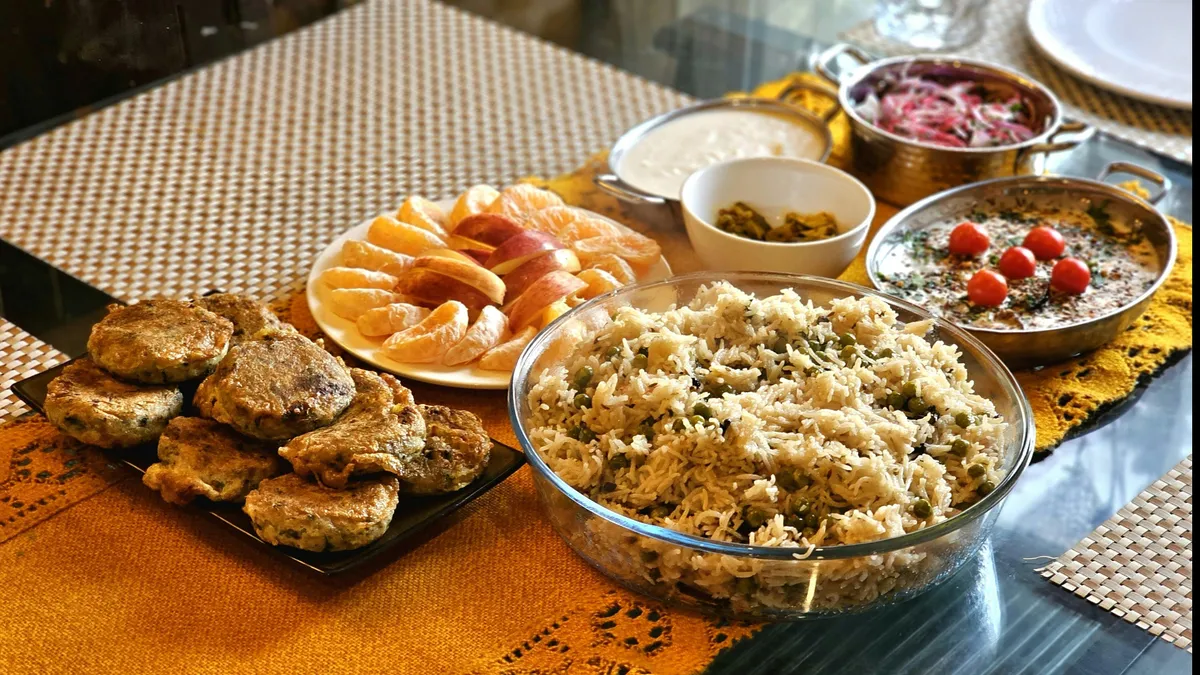
There is a particular kind of arrogance that comes with having watched someone cook your whole life. You have seen the motions so many times that your brain files it under things you already know, the way you assume you can ride a bike just because you grew up watching other people do it. I grew up watching my mother cook, which meant I was completely convinced I could replicate her. It took exactly one attempt at her chingri malaikari to dismantle that confidence entirely.
Chingri malaikari looks, on paper, like a manageable recipe. Prawns, coconut milk, a few whole spices, some ginger paste. What I did not account for was the temperature instinct. My mother knows when the oil is ready by looking at it. She knows when the coconut milk is about to split before it actually splits. She adjusts the flame in small increments without measuring anything, responding to the curry the way you respond to a conversation. I followed a recipe. She follows something that lives in her hands. My version was edible. It tasted like a polite approximation of the real thing, which is almost worse than it being a disaster.
Then I tried daab chingri, which is prawns cooked inside a tender coconut, and this is where I understood that some recipes are not just about ingredients but about theatre and patience and a kind of confidence I have not earned yet. The marinade alone requires you to trust your own palate, to know when the mustard is sharp enough, when the coconut flesh has given enough of itself to the mixture. My mother does this without tasting every five seconds. She knows. I tasted it fourteen times and was still not sure.
Kaacha lonka chicken is perhaps the one that humbled me the most, because it seems the simplest. Green chillies, chicken, not much else getting in the way. But simplicity in Bengali cooking is a trap. When there are fewer ingredients, there is nowhere to hide. Every decision you make is audible. How much oil, how long you fry the chillies, whether you let the chicken sit in its own juices long enough before you rush it. My mother's version has a particular kind of heat that builds slowly and then sits with you. Mine was just hot. There is a difference, and I could not explain it to you, but I felt it.
Bhetki bhaapa, steamed fish with mustard and coconut, is the recipe I was most afraid of, and for good reason. The mustard paste has to be ground to a specific consistency. The ratio of yellow to black mustard matters. The banana leaf wrapping is not decorative, it is functional, it changes the flavour, and if you tear it wrong the whole thing loses something. I got the paste slightly grainy. My mother would have caught that before it went anywhere near the fish.
But none of this individual recipe failure prepared me for the real revelation, which was the three course lunch. The everyday, unremarkable, Tuesday afternoon lunch of pui shaag cooked down soft with mustard, laal shaag dal that is somehow earthy and bright at the same time, a rotation of bhaja that could be begun, potol, or aloo depending on what was sitting in the kitchen, and rice, always rice, the kind that has been rinsed the right number of times. My mother made this on a regular day. Not a special occasion. Not a Sunday. A regular day, before noon, while also doing four other things.
I tried to put together a version of this spread on a weekend when I had nowhere to be. It took me the entire morning. I was tired before I sat down to eat. And it was good, genuinely good, but it did not have the ease that hers carries. The ease is the part I cannot replicate, because it is not a technique. It is decades of doing something so many times that it stops costing you anything.
She cooked like it was nothing. It was never nothing. I just had to fail at it myself to finally understand that.