






 Copy Link
Snapshots
Long before India had cafes and cupping rooms, Indian coffee was travelling the world as cargo. Tied up in burlap sacks in wooden hulls and shipped across the unforgiving seas. While sailing via the Cape of Good Hope, monsoon winds chased the vessels with a kind of loyalty that forced the coffee beans to breathe the sea. What left India as raw, green, and bright reached Europe as pale, swollen and sun-bleached gold. Becoming something, it was never intended to be, a serendipitous accident of nature and geography.

“On that voyage about two centuries ago, a new flavour was born. A mellow, earthy, and well-rounded cup that was preferred by the Europeans, a flavour no one had ordered yet, but everyone remembered. As export infrastructure improved, India began to recreate that accidental journey with intention and purpose in the cup through a process we call monsooning our coffees. Where high-altitude coffees are exposed to the monsoon winds, and the profile in the cup is therefore crafted by the weather, aged by the monsoon breath, and transformed by time instead of technique,” says Sadhavi Ashwani, co-founder of Baba's Beans.
The evolution
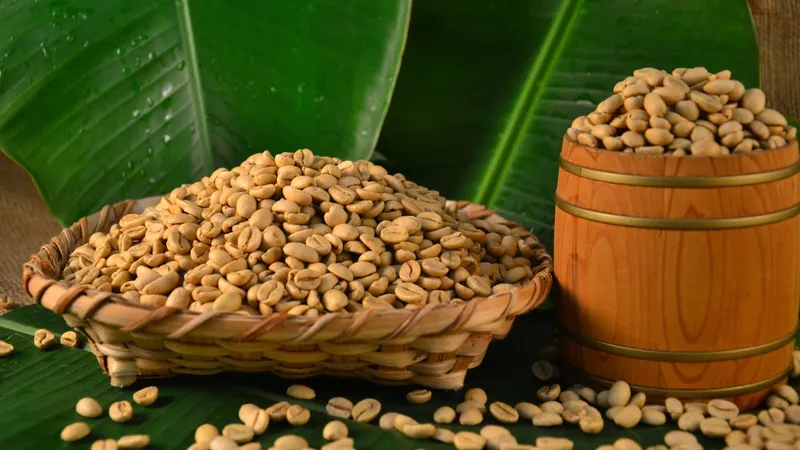
Monsooned Malabar is the only coffee in the world that has a season as its co-producer. Most coffees are shaped by soil, altitude, and human hands. This bean is sculpted by monsoon itself, aged in giant coastal warehouses with open sides, where heavy salt-laden winds barrel into the Malabar coast every year like an orchestra tuning up before a storm. Over 12-16 weeks, the bean swells, softens and loses its sharp edges. Acidity dissolves, and the body of the coffee develops depth. With the passage of time and with safe and faster shipping vessels and the introduction of the Suez Canal, the sea transportation time got drastically reduced to about four weeks, and the coffees reached their destination in the European countries without prolonged exposure to high humidity winds over the sea. “As a result, these coffee beans had a different appearance and taste profile from what the European consumer was familiar with and used to. This led to complaints from European countries and their consumers stating that the quality was very different and not what they normally drank,” explains Dr Sunalini Menon, Asia’s First Lady of Coffee, India's first female coffee taster, and president of Coffeelab Limited.
The intervention
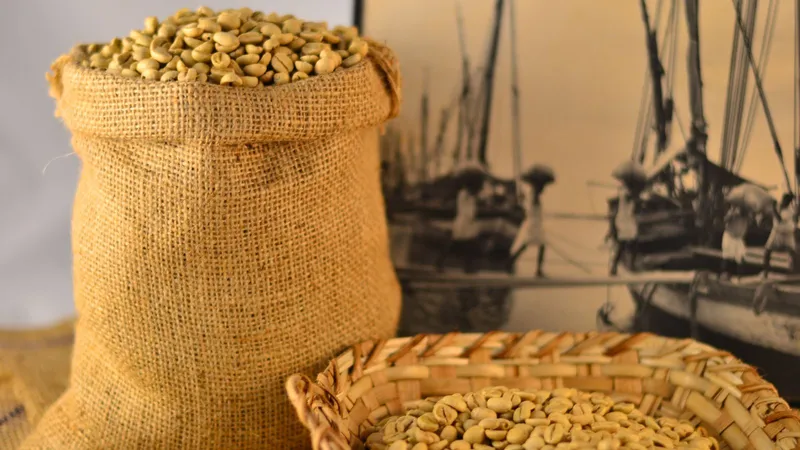
The Coffee Board of India, the nodal body for coffee in India and which was handling the marketing of Indian coffee on behalf of the growers at that point in time, appointed an official of the Board to travel to the Scandinavian countries to check on the quality complaint. The official, after examining the problem, returned to India with samples of the coffee beans, which looked and tasted very different. It took a while for the team to figure out that the seawater, through the monsoon winds, influenced and was influenced by the greenish-brown beans that were being stored and transported in jute bags in the sailing ships.
“The sea salt of the seawater brought about chemical changes within the beans and brought about changes in both the visual appearance and in the cup quality of the coffee. Thereafter, the CFTRI and the Coffee Board worked together and experimented with coffee beans on the west coast of India, which coastal area receives monsoon rains between June and October of a year. Through a series of experiments, they started exposing high-quality, large-sized beans of the natural-type coffees of Arabica and Robusta to the monsoon winds within a warehouse. They developed a procedure of spreading the coffee beans in a warehouse with a series of open windows, carrying out frequent raking of the coffee beans, bagging, and re-bagging them from June to October of a year. This process brought about the changes, both physically and in the taste profile, which the European consumers desired in the cup,” adds Menon.
The taste
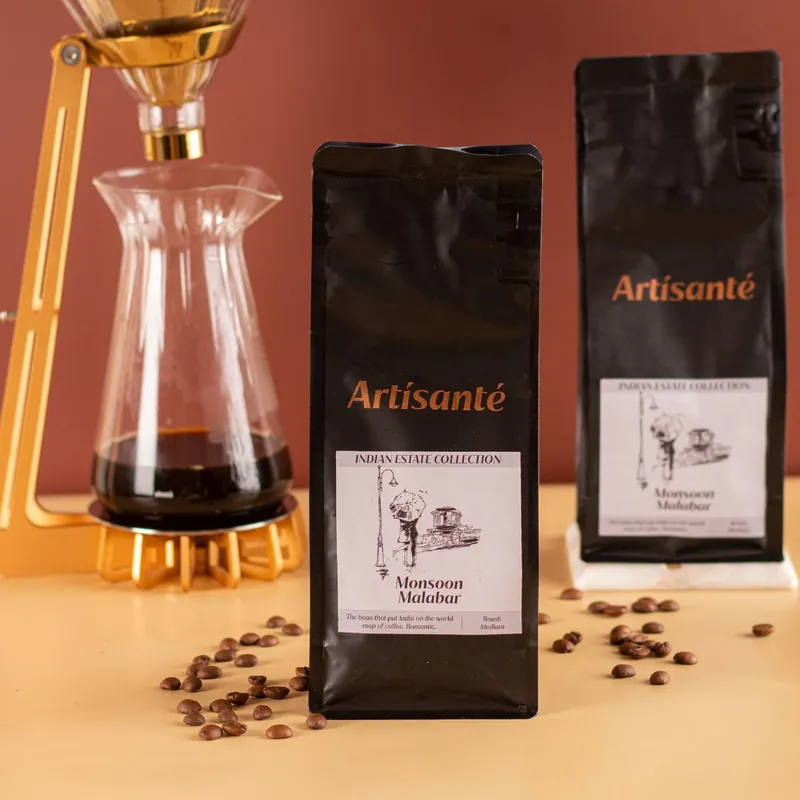
In general, Monsooned Malabar tastes distinctly heavy-bodied and mellow, with almost no acidity. Expect earthy, woody tones layered with dark chocolate. It shines in espresso and milk drinks (cortado/flat white/South Indian filter), where the heavy body and low acidity cut through milk and give a chocolatey, comforting cup. “While it’s not your typical bright, fruity pour-over, Monsooned Malabar brings its own charm, a smooth, low-acidity cup with deep cocoa, toasted nut notes and a velvety texture that feels unusually rich for a filter brew. We strongly believe at Artisanté that the monsooned bean makes the best coffee when the bean is roasted light-medium, and not dark. The earthy, nutty flavours emerge and linger delicately on your palate for a long time, with the romantic memory lingering even longer,” says Amit Madnani, Founder, Artisanté.
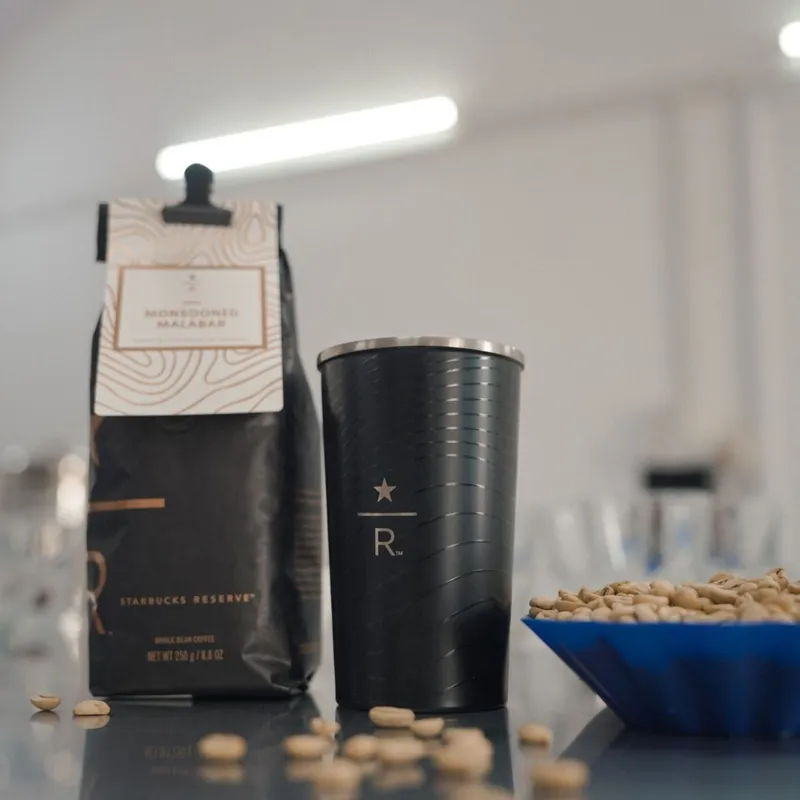
Likewise, the Starbucks Reserve® Monsooned Malabar is an exceptional Arabica blend hailing from the Malabar coast that embodies the rich traditions of Southern India’s esteemed coffee culture, shaped by coastal winds and monsoon rains. “Here, the beans are spread out to absorb the seasonal rains and coastal winds for up to six months. During this time, they are meticulously raked and turned to ensure uniform exposure to humidity. This process causes the beans to swell, transforming them into a light tan colour while reducing acidity and unveiling new aromas and flavours,” says a Starbucks spokesperson.
The difference
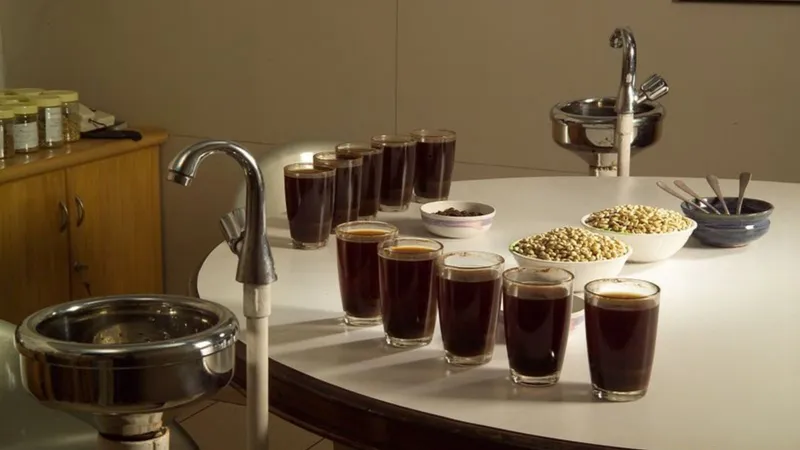
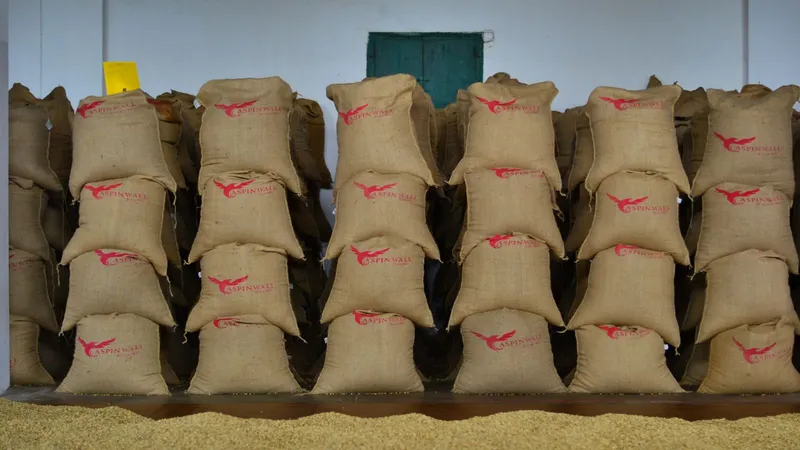
The legend of this bean finds a special place on coffee menus across the world. There are two leading producers of monsooned coffees, M/s Aspinwall and Company and M/s Allanasons. M/s Aspinwall & Company have branded their Monsooned Arabica preparation as 'Aspinwall's Monsooned Malabar Mellows', which is very famous and in demand, especially in the Scandinavian countries. “In fact, if you go to Norway, you will see an Indian Monsooned Malabar coffee being served as a standalone coffee in the cafes. That speaks volumes on the quality of the coffee and the popular acceptance of this type of coffee by the consumers. The Monsooned Malabar beans are sold in the cafes, either as an espresso or as a pour-over. And what is interesting about the espresso is the crema, which is very thick and locks in the aromatics of the beans, which are released when the consumer takes a sip of the coffee! Apart from the thick crema and aromatics, the espresso cup is soft and smooth with a silky rounded mouthfeel, very mellow, with low bitterness and highlighting the flavours of the variety,” says Menon.

Urvaksh Bharucha, Head of Beverage, Roast CCx, adds, “It’s one of the most recognisable Indian coffees internationally, especially in Europe, and is widely used in espresso blends for crema, body, and smoothness. Because it has such low acidity, it is a favourite among people who prefer smooth, non-sharp coffees or those with acidity sensitivities. It pairs exceptionally well with milk-based drinks due to its heavy body.” The finish is generally warm, comforting, and rounded rather than sharp or fruity. Are you ready to say hello to the cup that cheers in more ways than one?