






 Copy Link
Snapshots
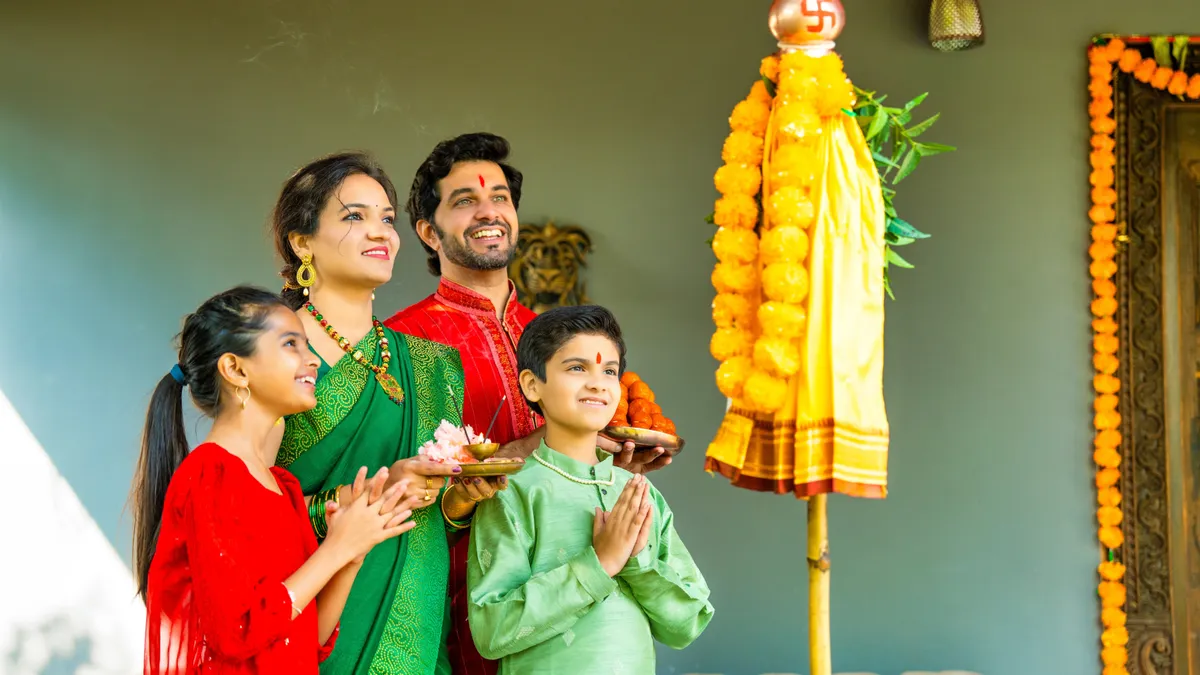
For many in Maharashtra and elsewhere in India, Gudi Padwa is the first festival of the new year. This year, March 22 marks the beginning of the Chaitra month in the Hindu lunisolar calendar. People in Maharashtra commemorate this auspicious day with a lot of energy and happiness because of its significance in their culture. In addition to visiting loved ones to offer greetings and presents, people also make and enjoy celebratory dishes like Shrikhand and Puran Poli.
Time to usher in the new year with dhol and pomp! The processions are the main event of the Gudi Padwa festival! People, particularly women dressed in traditional attire, participate in a procession to celebrate the Maharashtrian New Year. Mumbai comes alive with these processions of the Gudi Padwa celebration!
But how does India celebrate Gudi Padwa?
Gudi Padwa celebrations all across India
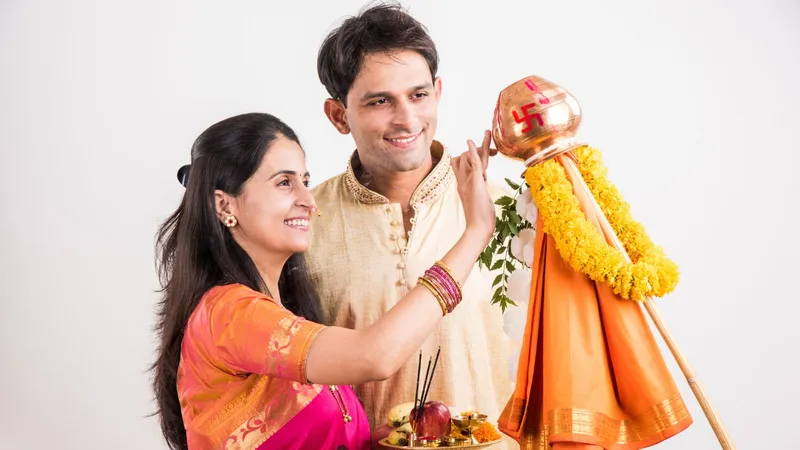
Gudi Padwa celebration is mainly done by the Marathi and Konkan Hindus in the spring to welcome the new lunar year. On the first day of Chaitra, which is the first month of the Hindu lunisolar calendar, people in the states of Maharashtra, Goa, and Daman celebrate it. Hallmarks of the celebration include Rangoli, vibrant floor decorations; a unique garment called gudi dhvaja adorned with mango leaves, flowers, and neem leaves; and a sugar crystal gathi crowned with upside-down silver or copper dishes. Street parties, dancing, and festive fare are also part of the celebration. The first day of the moon's bright phase is known as guḍhī pāḍwā in Maharashtra. Different Hindu groups in Karnataka use different terms to describe the same day: Konkani Hindus call it sausāra pāḍavo or sausāra pāḍyo, Kannada Hindus call it Yugādi or Ugadi, Telugu Hindus call it Ugadi, Sindhi people call it Cheti Chand, and Kashmiri Pandits call it Navreh.
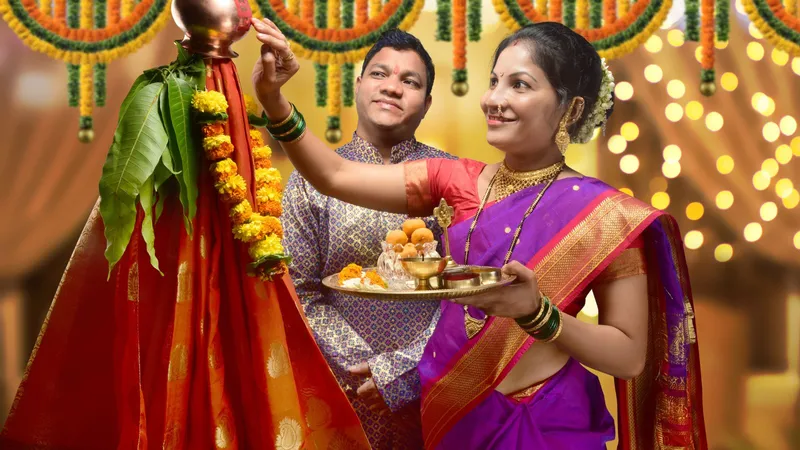
The Gudi Padva festival marks the beginning of spring and the harvest of rabi crops. The Hindu deity Brahma is said to have created the universe and time on the very day celebrated during this festival. Some believe it marks the beginning of the Shalivahan calendar, commemorating Rama's conquest over the Huns in the first century, or the crowning of Rama in Ayodhya, following his triumph over Ravana. Anne Feldhaus states that the celebration in rural Maharashtra is associated with the dancing of Shiva and the unity of the community as they journey to a Shiva temple with the Gudhi Kavads.
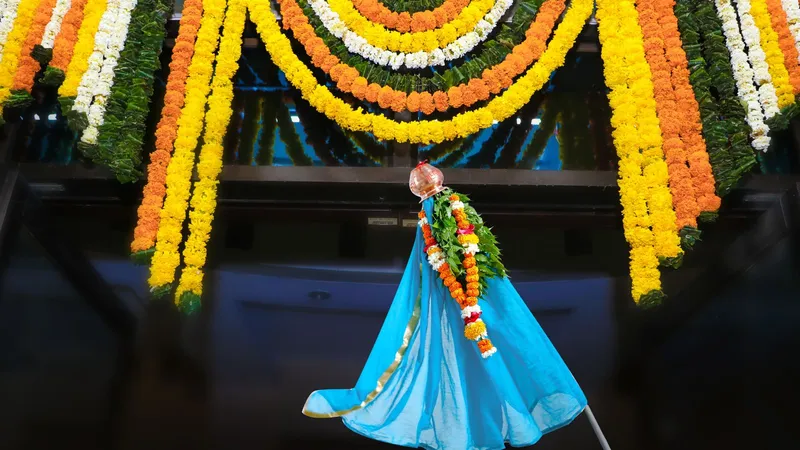
So how do you celebrate Gudi Padwa? On the occasion of Gudi Padwa, every home is decorated with a gudi (or gudhi). A lengthy bamboo pole is adorned with a vibrantly colored scarf-like fabric. A flower garland is fastened to one or more branches of mango and neem leaves and placed on top. A pot made of silver, bronze, or copper (handi or kalash) is placed on top, symbolising triumph or accomplishment.
Where to celebrate Gudi Padwa in Mumbai
Ganesh Mandir, Dombivali
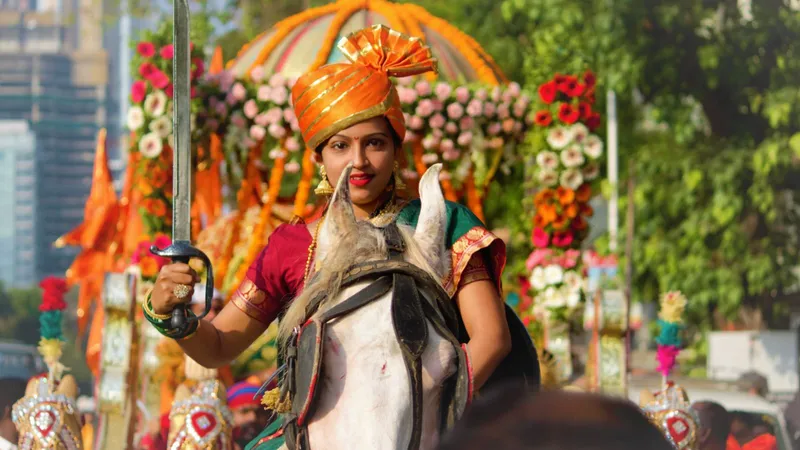
Dombivli's Ganesh Mandir celebrates the event with great zeal. Flower arrangements, string lights, and rangolis will adorn the shrine. Lord Ganesh's statue will be decked out in fresh threads and jewels as his devotees offer him heartfelt prayers for a bountiful new year. Hoisting the Gudi by the temple priest is the most spectacular part of the ceremony at Ganesh Mandir Dombivli. The next step is to worship the Gudi and pray to it. The temple will also host cultural events and workshops, including traditional dance performances and art classes that celebrate Maharashtrian culture. At the prasad stands, visitors can purchase traditional Maharashtrian fare such as Puran Poli, Shrikhand, and Aamras, while at the snack stands, they can purchase various sweets and snacks. This Gudi Padwa event is absolutely unmissable!
Mumbai Chowpatty
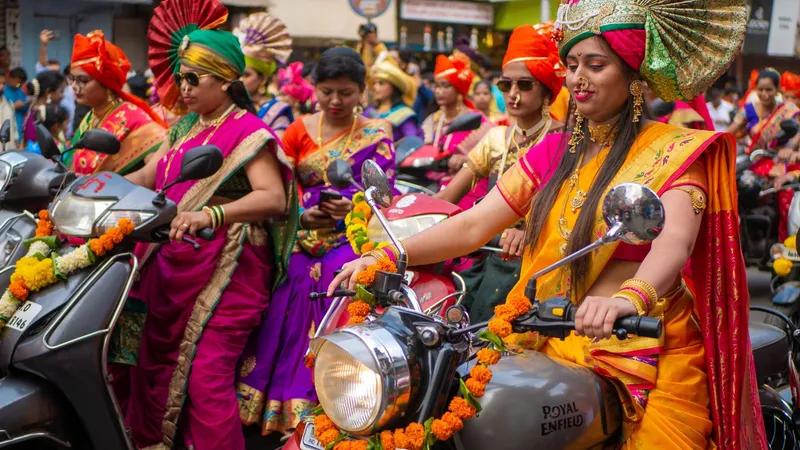
Among the most visible locations for the Gudi Pawda festivities is Chowpatty Beach. An enormous crowd goes there annually. At this spot, onlookers assemble to see the magnificent Gudi parade, accompanied by a chariot with a brass flag. Drums and traditional music will accompany the parade as participants dance and march. Vada Pav, Bhel Puri, and Kanda Bhaji are just a few of the local specialities sold at the many food stands. Honestly, the best way to celebrate Gudi Padwa in Mumbai if you ask us!
Girgaon
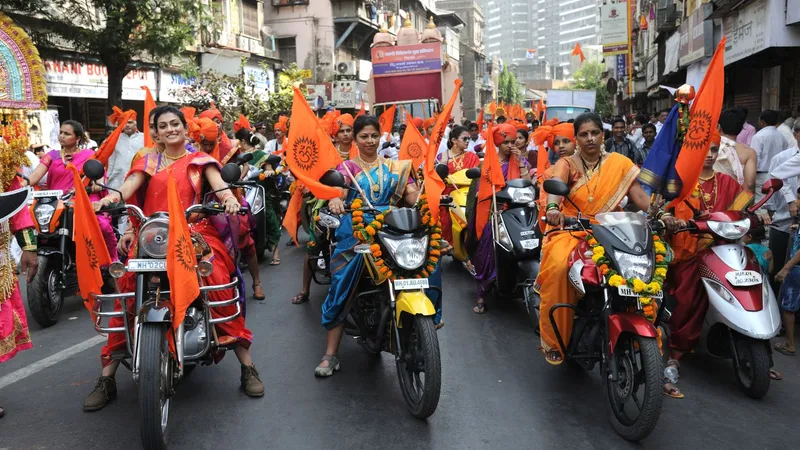
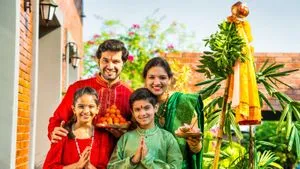
The magnificent and multicoloured Gudi parade is the hallmark of the Girgaon festivities. The parade begins at the Girgaon Chowpatty beach and travels through the neighbourhood's many streets and alleys. A group of people accompany the Gudi on a gilded chariot, playing traditional musical instruments like the dhol-tasha and lezim. The cracking of the coconut at the conclusion of the parade is the most important part of the celebration. It is thought to represent the end of one's ego and the start of a new life cycle. The festivities here are a reflection of the community's strength and the rich heritage of Maharashtra. Truly one of the most anticipated gudi padwa events out there!