






 Copy Link
Snapshots
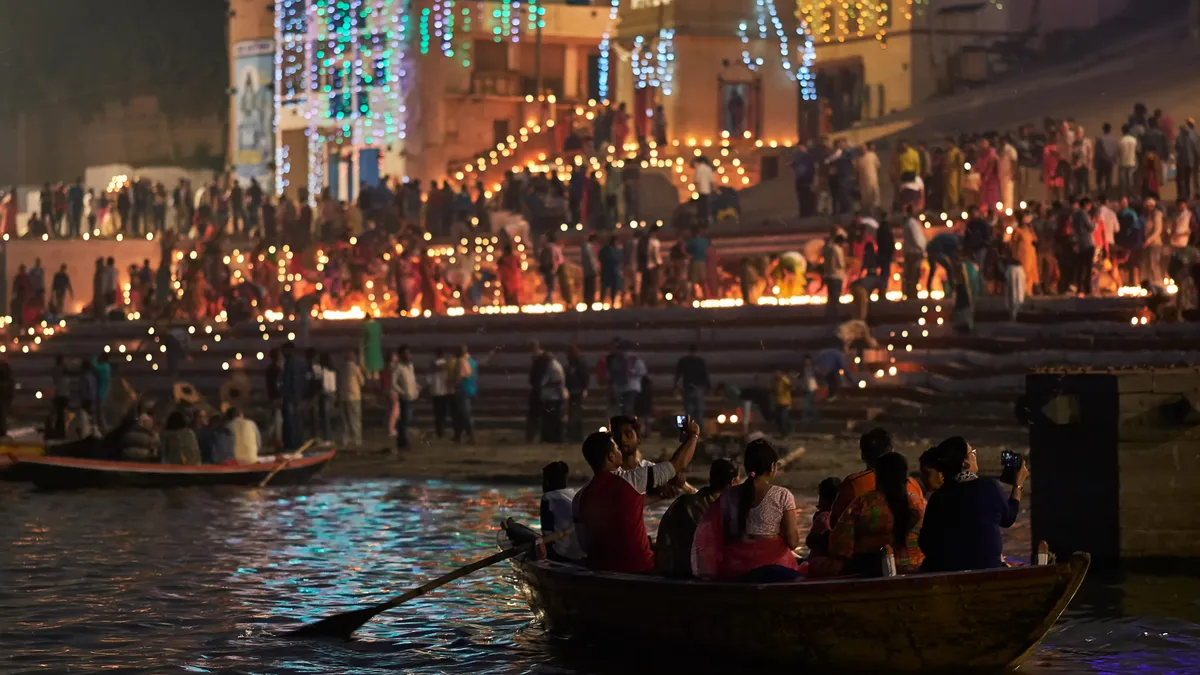
In the Indian city of Varanasi, the Dev Deepavali—also known as "the Diwali of the Gods" or "Festival of Lights of the Gods"—is held during the Kartik Poornima. This Hindu festival occurs fifteen days after Diwali, on the fifteenth day of the Kartika (November–December) lunar month. In homage to Ganga, the Ganges, and its patron goddess, over one million clay lights (diyas) are illuminated along the steps of each ghat along the riverbank of the Ganges, beginning with Ravidas Ghat in the south and ending at Rajghat. According to Hindu mythology, today is the day the gods descend to Earth to take a dip in the Ganges. You may also hear people refer to this celebration as Tripura Purnima Snan.In 1991, Pandit Kishori Raman Dubey (Babu Maharaj) began the custom of lighting lamps at the Dashashwamedh Ghat on the day of the Dev Deepawali festival.
Houses are adorned with oil lights and multicoloured door patterns during the Dev Deepawali festival. Varanasi hosts nighttime festivities that include the lighting of oil lamps on fire and the parade of decked deities through the city streets.
The legend that surrounds Dev Deepwali
Vidyunmali, Tarakaksha, and Kamalaksha are the three sons of the demon Tarakasura, according to one tale. Lord Shiva is also mentioned. Following a period of fasting and prayer, the brothers received a blessing from Lord Brahma: three strong forts constructed of metal, set up in the heavens, on earth, and in the underworld. Once every thousand years, these forts—called Tripura—would line up, and it would take an arrow shot from an apparently impossible chariot—and an angry arrow—to bring them crashing down. This blessing brought the demons great prosperity, which alarmed the gods.
Since the brothers were initially living righteously, neither Brahma nor Shiva interfered. However, following Vishnu's counsel, a heavenly being quietly guided the demons astray with a new theory, even converting the wise Narada. After they strayed from dharma, Shiva channelled the might of the gods into a magnificent chariot, which he assembled by combining the elements: the earth as the body, Mount Meru as the bow, Vasuki the snake as the string, and the Paashupat weapon as the one true arrow. To pull the chariot, Vishnu assumed the shape of a powerful bull. Aiming his arrow at Tripura, Shiva let go of it as the three forts converged. As a result of his sorrow for the dead, the Rudraksha tree was born. One of the legendary origins of Dev Deepawali is this triumph of virtue over evil.
Ripunjaya, King Divodasa, is the subject of an additional tale. He possessed heavenly abilities and ruled Kashi under an oath that forbade even the gods, including Shiva, from entering the city. Because of this vow, Shiva was unable to live in Kashi when he married Parvati, despite his desire to do so. Deities such as Ganesha (in disguise as a Brahmin), Aditya, Bhairava, and yoginis were dispatched by the gods to expose shortcomings in Divodasa. The monarch was just and righteous, so nobody found fault with him. Eventually, Ganesha, in his role as main advisor, pleaded with Divodasa to return to Shiva so that he might finally rest easy. The monarch beseeched Shiva to make his permanent residence in a Shivalinga he had built close to what is now Mir Ghat. The gods were so happy to be home that they celebrated with a festival dedicated to their triumphant return to Kashi—Dev Deepawali—by lighting rows of lamps on the ghats.
Important Dev Deepawali 2025 Ceremonies
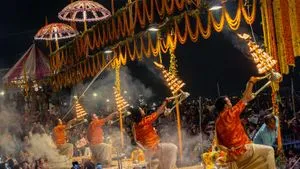
Devotees mostly engage in kartik snan, which is bathing sacredly in the Ganges during Kartika, and deepdan, which is lighting lamps with oil and presenting them to Ganga in the evening. Evenings also see the performance of the Ganga aarti.
Prabodhini Ekadashi, the eleventh lunar day of Kartika, marks the beginning of the five-day celebrations that end on Kartik Poornima. At the ghats, during the festival, worshippers pay homage to the martyrs by praying to the Ganga, lighting candles, and watching the aarti. Officers from the Varanasi District Police, the 39th Gorkha Training Centre, the 95th CRPF battalion, the 4th Air Force Selection Board, the 7th UP battalion of the NCC (naval), and the Benares Hindu University (BHU) all participate in this event, which is organised by Ganga Seva Nidhi. After the three branches of the armed forces play the customary final post, there is a closing ceremony when the sky lamps are illuminated. The ceremony includes the presentation of the Bhagirath Shourya Samman awards and the singing of patriotic hymns, bhajans, and songs.
Many people go to the festival specifically to see the dazzling display of one million lamps—both floating and fixed—illuminating the river and ghats in a variety of vibrant hues. On the evening of the festival, thousands of worshippers from all over the nation, including the holy city of Varanasi and the nearby villages, congregate on the Ganges ghats to see the aarti. In order to maintain order during the event, the local administration has made several extensive security precautions.
How is Dev Deepawali 2025 going to be celebrated?
Lamps, oil, and wicks are generously donated by villagers and volunteers at each ghat, and a committee is formed to arrange them in stunning patterns—such as maps of India, enormous Om, or Swastik symbols. Cultural performances of classical music and dance are showcased on floating stages throughout the festivities, which are enhanced with pyrotechnics, adorned boats, fire-eaters, and more. With towering lights, camphor flames, and flower offerings, a spectacular Ganga Aarti and Dugdhaabhishek are conducted at Dashashwamedh and Shitla Ghats. The entire ceremony takes place between 6:30 and 9:00 p.m., attracting visitors who pay a premium to ride the riverboats and witness the spectacle. Incorporating laser displays with the historic beauty has brought it into the present day.
When is Dev Deepwali going to be held in 2025?
Dev Deepwali 2025 is going to be held on the 5th of November.