






 Copy Link
Snapshots
Think Bangalore and it is not surprising to think of software parks, start-ups and innovation hubs. The capital of Karnataka is today synonymous with being the IT and start-up capital of the country and hence has earned the moniker of “Silicon Valley of India”. But did you know that Bangalore, aka Bengaluru, was earlier known as the Garden City? Or that it has a rich history and heritage that spans several centuries? It is a city whose spirit is alive in age-old traditions, interesting rituals and unique festivals. The annual Kadlekai Parishe, which translates to groundnut festival in Kannada, is one such celebration that dates back to over 400 years. A harvest festival steeped in myth and folklore, Kadlekai Parishe is a reminder of the city’s cultural traditions, the importance of communities coming together and making connections in a world increasingly dominated by hectic schedules, deadlines and hustle culture. Read on to find out more.
Rooted in legend
Kadlekai Parishe is held each year on Bull Temple Road in the renowned Basavanagudi locality of the city. For the uninitiated, Basavanagudi, located in south Bengaluru, is one of the oldest planned suburbs of the city that was developed in the late 19th century when the city was struck by the plague epidemic. The area is home to one of the city’s most iconic landmarks, the Bull temple or the Dodda Basavanna Temple, dedicated to the sacred bull or Nandi that is considered as the vahana (vehicle) of Lord Shiva. An architectural marvel, the Nandi idol here is a whopping 15 feet tall and 20 feet long.
_1763450022043.jpg?w=800&f=webp&t=cb5997c273b8e9a0)
The bull temple is in fact, the epicentre of the groundnut festival celebrations. The locality of Basavanagudi was earlier called Sunkenahalli and it was home to several groundnut fields, which was the main crop grown here. Legend has it that a big bull visited the fields every full moon night and ravaged the crop each time. This large-scale destruction created anguish among the farmers who prayed to the big bull to prevent these attacks. Their prayers were answered and as a token of gratitude the farmers decided to offer the first harvest of groundnuts to Nandi each year. Another story goes that a farmer attacked this ferocious bull with a stick which rendered it immobile. The next day it transformed into a large stone idol and farmers realizing its divine nature decided to offer the first harvest of groundnuts to the Lord as an act of obeisance.
“Apart from these legends, another key aspect of this festival was that farmers from nearby villages like Kolar, Doddballapur and Gauribidanur would also participate in the festival. They entered the city via the erstwhile Kempambudhi gate and before approaching bull temple in Basavanagudi, they stopped by the Arle Pete Basaweshwara Swami temple in Cottonpet and offered a part of their harvest. Also, the famous Nandi dwaja which is a very heavy and intricately decorated pole bearing the statue of the Nandi, key to the folk-dance Nandi Kolu Kunitha performed at the festival is first assembled and worshipped in this temple” says Rajeev Nrupathunga, author, historian and founder of Revival Heritage Hub, Bangalore. The Nandi Kolu Kunitha or Nandi Dwaja Kunitha is incidentally a high energy, vibrant, ancient folk dance that is intrinsic to the festival. Dancers balance this pole which is close to 10 meters with their hands in an act of sheer strength, balance and grit as enthusiastic drummers deliver high energy beats in the background.
Vibrant ambience
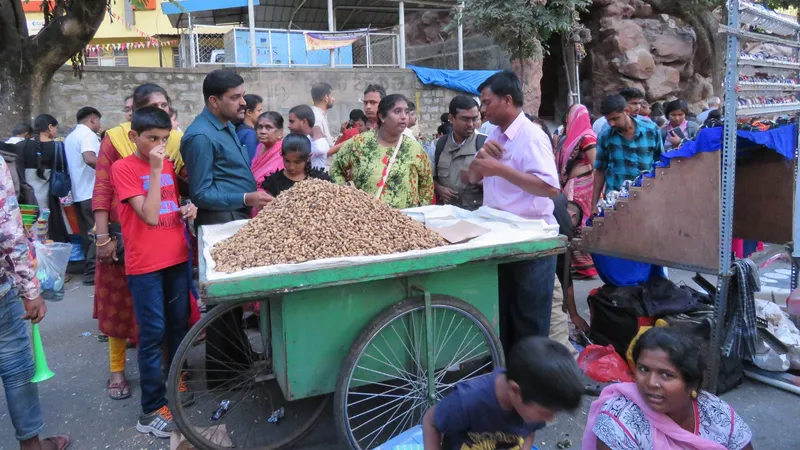
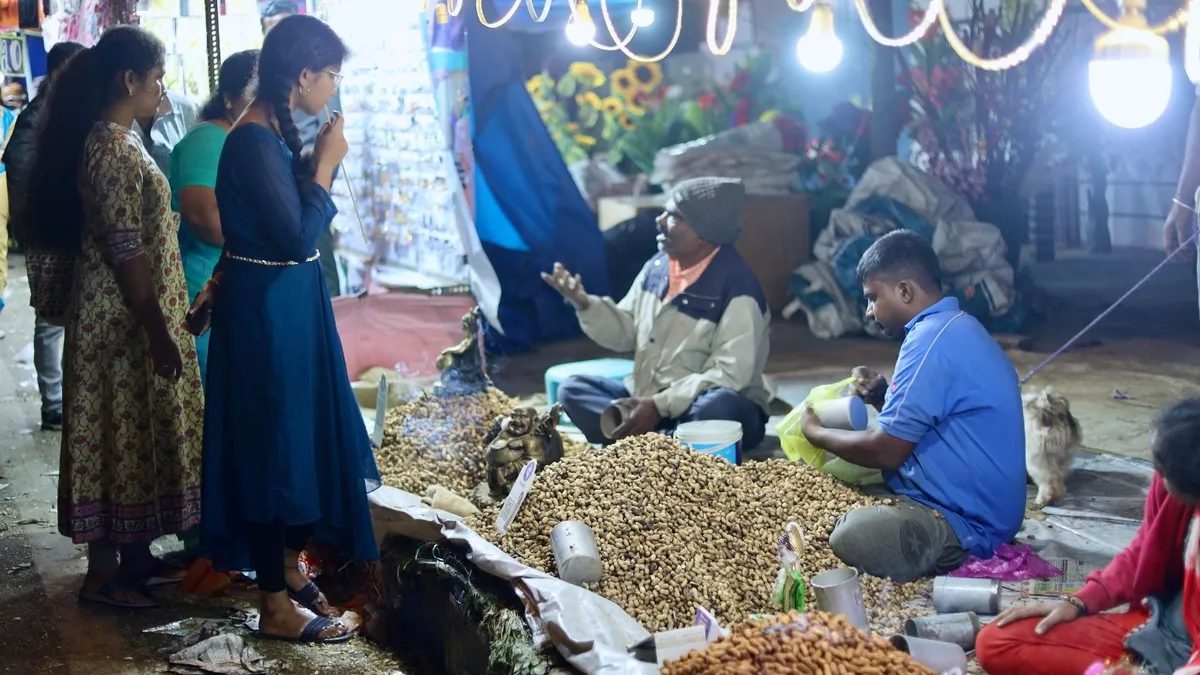
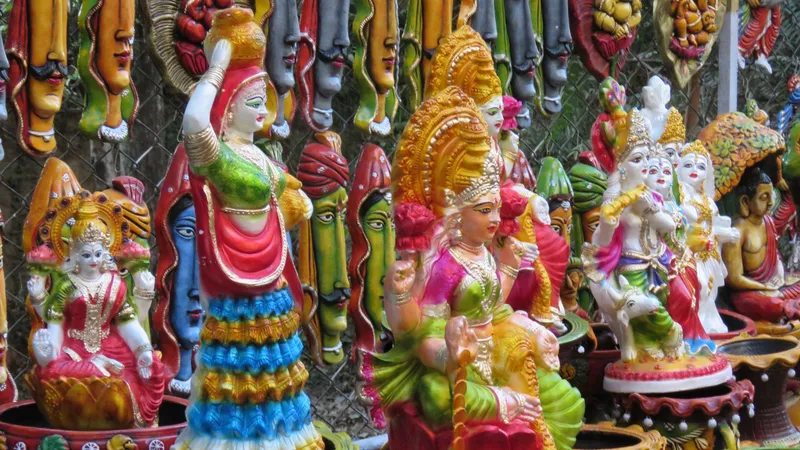
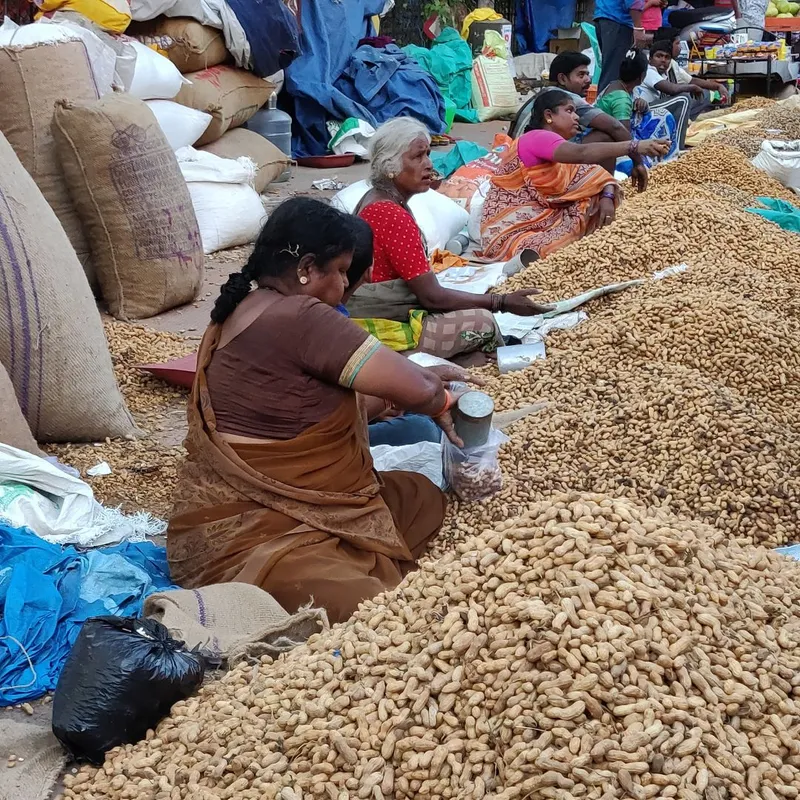
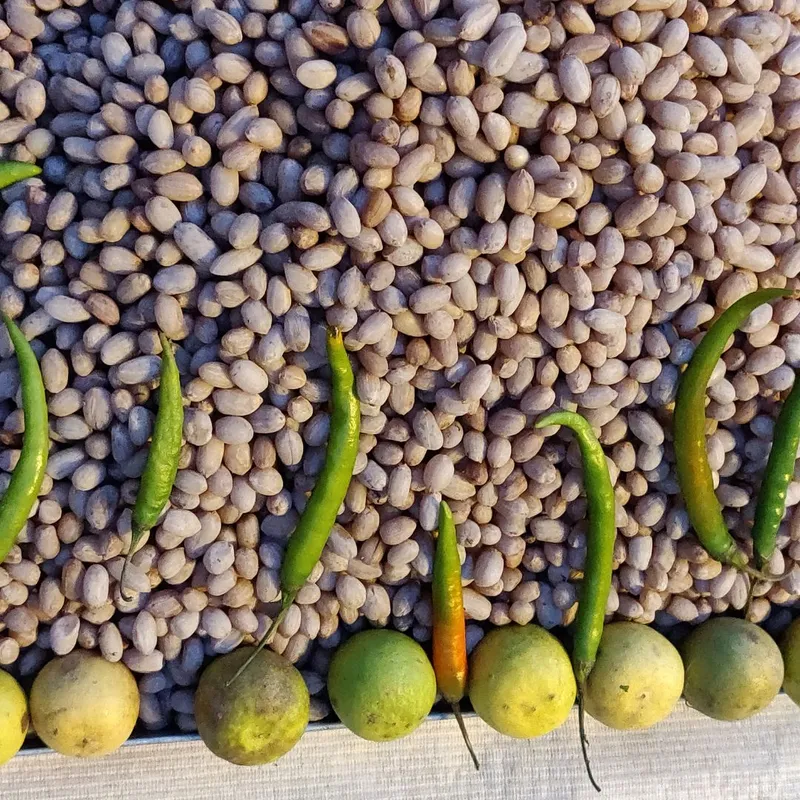
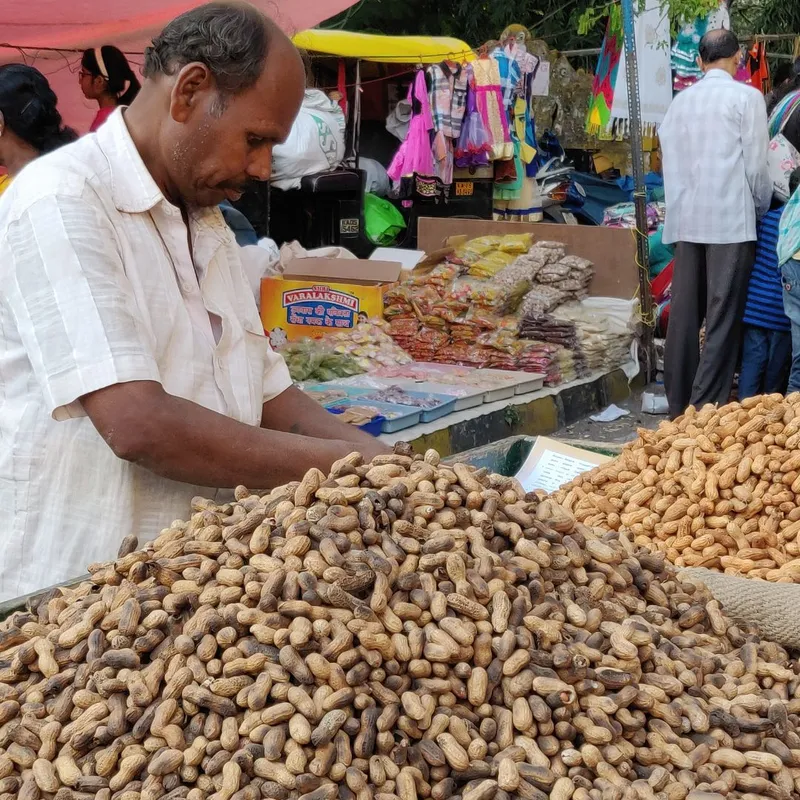
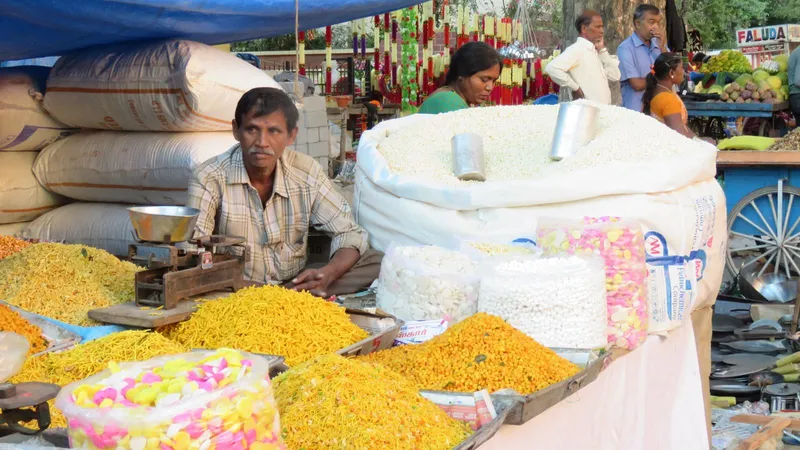
The groundnut fair is held each year on the last Monday of the holy month of Karthik. The fair is held on the main bull temple road which is blocked for traffic from a couple of days prior. The entire road is swarmed with farmers who come even come from the neighbouring states like Andhra Pradesh and Tamil Nadu. It is a haven for groundnut lovers as the entire stretch is flooded with peanuts of all sizes. They are sold in the raw or roasted form. Apart from groundnuts, there are stalls retailing an array of snacks, sweets, traditional cookware, pots, pans, kolam powder and much more. There are toys, bangles, trinkets, terracotta and clay items as well. There is a dedicated play area for children too.
The festival gets bigger each year with swelling crowds who throng the entire length and breadth of bull temple road. The festival which officially starts on 17-Nov this year has been extended for five days. “Earlier the festivities were restricted to two days, mainly the dodd (big) parishe on Monday and the chikka (small) parishe on Tuesday. Our happiness knew no bounds as we joyfully munched on copious amounts of peanuts. In fact, vendors gave jaggery along with peanuts for free as it is known to alleviate any side effects like bloating and gas which generally occurs if you consume excessive amounts of peanuts. It was a much looked forward to outing with our friends and we would spend almost the whole day at the fair. Schools would be closed, and playing on the merry-go-round, shopping for trinkets and packing peanuts for our folks at home remain some of my most cherished childhood memories,” says Pramila Murthy, 75, an old-time resident of Basavanagudi.
While the fair at Basavanagudi is the original and the biggest one, similar fairs are now being conducted in other localities of Bangalore like Malleshwaram, Amruthalli and Kengeri.
Eco-friendly initiatives
Given that the festival attracts lakhs of visitors, there has been an increased focus since the past three years to make the celebration largely waste and plastic-free. Several city groups, citizens, students, volunteers, RWAs etc, have come together to ensure that the event is conducted in the spirit of sustainability. “We have been very active in creating posters, videos, etc which help raise awareness and educate people on how to reduce plastic, bring their own bags and also easily craft paper bags which can be used when buying peanuts and other items,” says Odette Katrak, Founder Beautiful Bharat, a volunteer group working to bring sustainable habits to every home and event. The tagline of the festival, “Kadalekayi parishe bani, kai cheela thani” (come to the groundnut fair, carry your own bags,) perfectly captures the essence of the message of zero plastic.
Preparations are already on in full swing to make sure that the volunteers, as well as the vendors, are prepared. “We have started giving the message to vendors, many of whom have already arrived from different parts of Karnataka and neighbouring states. The area of the festival has been divided into zones, and time slots have been allotted to volunteers who will be distributing paper bags free of cost and also monitoring the waste generated. We expect close to 1500 volunteers to support the cause over the five-day duration of the festival” says Dr Shanthi Tummala, representing "Zero Waste Collective" which is a collective of all NGOs working for sustainability in Bangalore.
Apart from paper bags, there is also a concerted effort on encouraging the use of cloth bags. “We have decided to set up stalls for cloth bags as they can be reused and is a better solution as paper bags tend to be discarded even before they are damaged. Vendors and buyers can easily procure them, which is a great way to minimise trash,” says Aishwarya Nair, Programme Associate, Solid Waste Management Round Table (SWMRT).